




Anxiety can make your thoughts race, your body tense, and everyday situations feel harder than they normally would. When that happens, having a few practical coping tools can make the moment feel more manageable. Learning how to cope with anxiety does not mean eliminating every anxious feeling. It means developing healthier ways to respond when anxiety shows up.
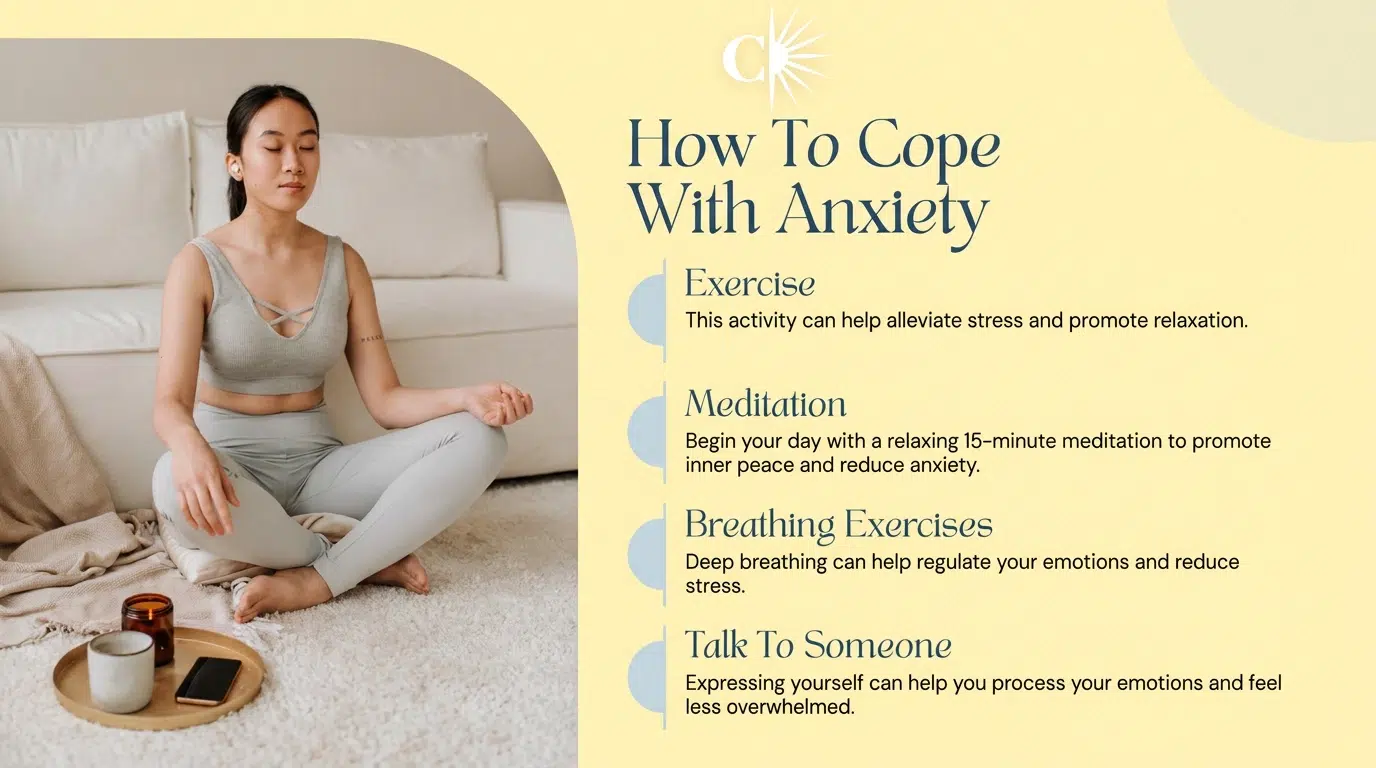
Exercise, meditation, breathing exercises, and talking to someone are four simple strategies that can help reduce stress, create space from overwhelming thoughts, and make it easier to regulate your emotions.
What Does Coping With Anxiety Actually Mean?
Coping with anxiety means responding to anxious thoughts, emotions, and physical sensations in ways that help you regain a sense of control.
Anxiety can affect both the mind and body. You may notice racing thoughts, difficulty concentrating, irritability, muscle tension, restlessness, a faster heartbeat, or a feeling that something bad is about to happen.
The instinct may be to avoid whatever is making you anxious. While avoidance can provide short-term relief, consistently avoiding difficult situations can sometimes make anxiety harder to manage over time.
Healthy coping strategies take a different approach. They help you calm your nervous system, process what you are feeling, and gradually build confidence in your ability to handle uncomfortable emotions.
Exercise Can Help Release Stress
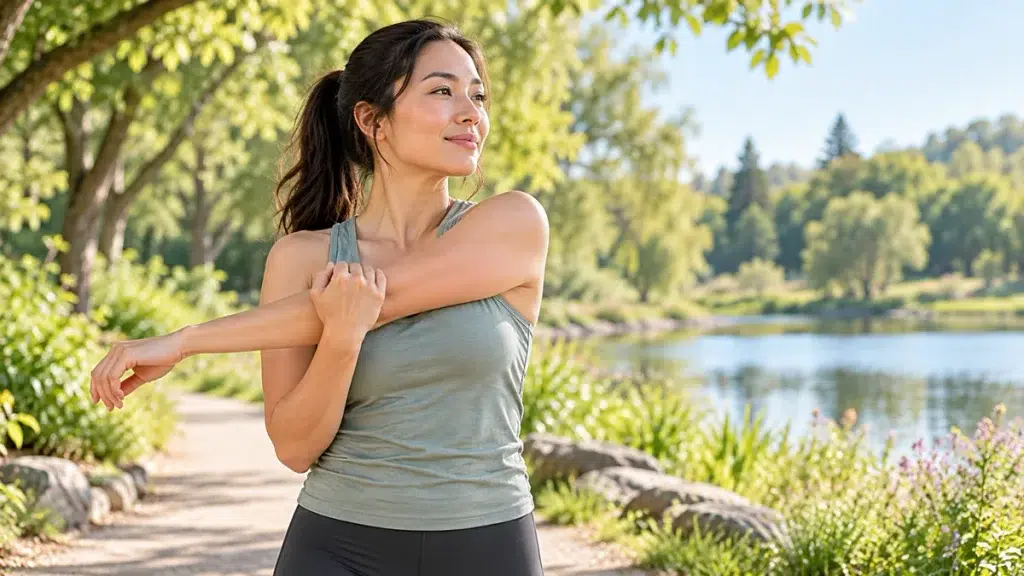
Movement is one of the simplest ways to respond when stress and anxiety begin building up.
Anxiety often comes with physical energy. Your muscles may tighten, your breathing changes, and your body can feel restless or on edge. Physical activity gives some of that energy somewhere to go.
Exercise does not have to mean an intense gym session. Helpful movement might include:
- Taking a walk outside
- Stretching for several minutes
- Riding a bike
- Swimming
- Doing yoga
- Dancing
- Going for a light jog
- Playing a recreational sport
The goal is not to punish your body or force yourself through an exhausting workout. It is simply to move in a way that feels manageable.
Even a short period of movement can give you a break from repetitive anxious thoughts and help shift your attention toward what your body is doing in the present moment.
You do not need a perfect workout routine. Sometimes moving your body for a few minutes is enough to interrupt an anxious spiral.
Meditation Can Create Space From Anxious Thoughts
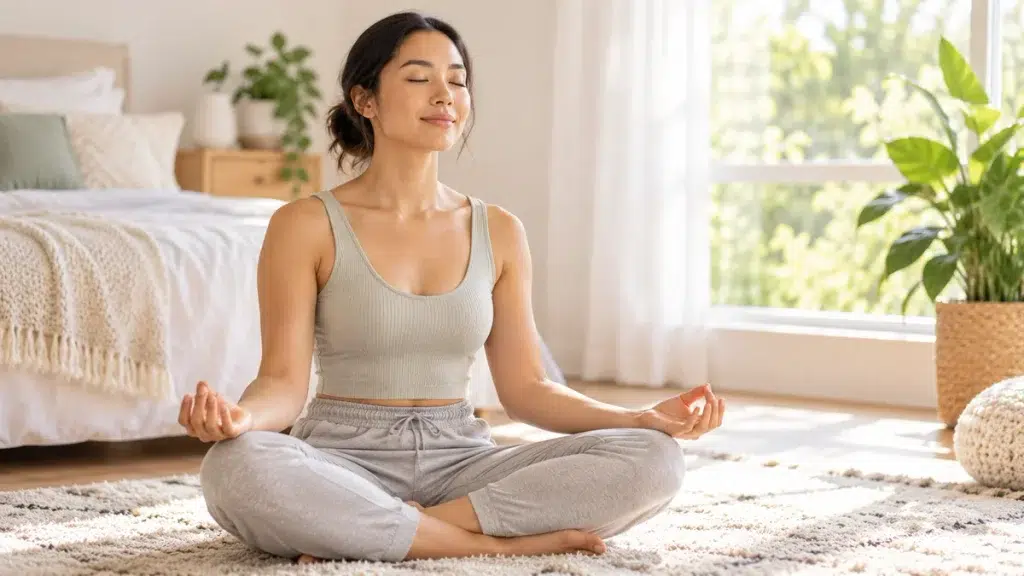
Anxiety has a way of pulling your attention into the future.
What if something goes wrong? What if you make a mistake? What if the situation becomes worse?
Meditation can help bring your attention back to what is happening right now.
A simple meditation does not require special equipment or complete silence. You can sit somewhere comfortable, close your eyes if that feels safe, and spend a few minutes paying attention to your breathing.
When thoughts appear, the goal is not to force them away. Notice them and gently return your attention to your breath, your body, or another point of focus.
The Instagram post recommends beginning the day with a relaxing 15-minute meditation to promote a greater sense of calm and reduce anxiety. Fifteen minutes can be useful, but it is not a requirement. If meditation is new to you, starting with two or five minutes may feel much more realistic.
Consistency often matters more than duration.
Breathing Exercises Can Calm the Body
Breathing changes when anxiety rises.
You may start breathing faster or more shallowly without even realizing it. That can reinforce the body’s stress response and make physical anxiety symptoms feel more intense.
Slowing your breathing can help interrupt that cycle.
One simple approach is:
- Sit or stand comfortably.
- Breathe in slowly through your nose.
- Allow your stomach to expand naturally.
- Exhale slowly and fully.
- Repeat for several breaths without forcing the pace.
The exact number of seconds matters less than keeping the breathing gentle and controlled.
Try to make your exhale slow rather than repeatedly taking very large breaths. The purpose is to settle your breathing, not to breathe as deeply as possible.
Breathing exercises are especially useful because they can be practiced almost anywhere, including before a stressful conversation, while sitting in a parked car, at work, or when trying to settle down before bed.
Talk to Someone Instead of Carrying It Alone

Anxiety often becomes heavier when everything stays inside your own head.
Talking to another person can help you slow down, organize your thoughts, and feel less overwhelmed by what you are experiencing.
That person might be:
- A trusted friend
- A family member
- A therapist
- A counselor
- A support group member
- Someone else you feel emotionally safe with
You do not always need the other person to solve the problem.
Sometimes saying, “I’m having a really anxious day and I just need someone to listen,” is enough.
Expressing what you are experiencing can make vague fears feel more understandable and give you another perspective on the situation.
For ongoing or severe anxiety, talking with a mental health professional can also help you identify triggers, understand recurring thought patterns, and develop coping strategies specific to your needs.
Try Not to Wait Until Anxiety Is Overwhelming
Coping skills tend to work better when they become part of your routine rather than something you use only when anxiety reaches its highest point.
For example, you might:
- Take a short walk every afternoon
- Practice breathing exercises before stressful meetings
- Meditate for several minutes in the morning
- Schedule regular time to talk with someone supportive
- Protect your sleep routine
- Reduce unnecessary stress where possible
Think of these habits as maintenance.
The more familiar a coping skill becomes during calmer periods, the easier it may be to use when anxiety increases.
What If One Anxiety Coping Strategy Does Not Work?
Not every technique works equally well for every person.
Meditation may feel calming for one person but frustrating for another. Someone else may get much more relief from walking, journaling, talking with a therapist, or using structured grounding techniques.
That does not mean you are coping incorrectly.
Anxiety management often involves finding a combination of strategies that fits your personality, circumstances, and symptoms.
You can experiment with different approaches and pay attention to what actually helps you feel more grounded.
It can also help to distinguish between a strategy that feels unfamiliar and one that genuinely makes your anxiety worse. Coping tools sometimes require practice, but they should not feel like another standard you have to meet perfectly.
Avoid Using Alcohol or Drugs to Manage Anxiety
When anxiety feels intense, substances can seem like a quick way to quiet the mind or relax the body.
Alcohol, sedatives, cannabis, or other substances may temporarily change how someone feels, but relying on them as the primary way to manage anxiety can create additional problems.
Over time, someone may begin using more often, needing substances to handle ordinary stress, or experiencing anxiety when the effects wear off.
This can create a difficult cycle:
Anxiety increases → substances provide temporary relief → anxiety returns → substance use increases.
When anxiety and substance use begin influencing each other, addressing both sides of the pattern is important.
Healthy coping strategies give you ways to respond to stress without depending entirely on substances to change how you feel.
When Should You Get Professional Help for Anxiety?
Occasional anxiety is a normal response to stress. Professional support becomes more important when anxiety repeatedly interferes with everyday life.
Consider reaching out if anxiety is:
- Affecting your ability to work or attend school
- Making it difficult to sleep
- Causing you to avoid important situations
- Interfering with relationships
- Leading to frequent panic symptoms
- Becoming difficult to control
- Contributing to alcohol or drug use
- Persisting despite your attempts to manage it
Treatment does not mean you have failed to cope on your own.
It means the problem may need more support than basic self-help strategies can provide.
Therapy can help identify what is driving anxiety, examine thought and behavior patterns, and build healthier ways of responding when symptoms appear.
How Changes Can Support Anxiety During Recovery
Anxiety and substance use can become closely connected. Some people use substances to cope with anxiety, while others notice anxiety becoming more intense during active addiction or recovery.
Addressing only one part of that cycle may leave the other unresolved.
At Changes, support can include:
- Individual therapy to explore anxiety, triggers, substance use, and coping patterns.
- Group therapy to practice healthier communication and connect with people facing similar challenges.
- Psychiatric support when symptoms require further evaluation and mental health care.
- Case management to create greater structure and stability around everyday responsibilities.
- Beyond Therapy programming to encourage healthier routines, movement, connection, and meaningful activities outside traditional therapy.
Recovery becomes stronger when people develop tools for handling stress and difficult emotions without automatically returning to unhealthy coping patterns.
Small Coping Skills Can Make a Real Difference
Managing anxiety does not require changing your entire life in one day.
Start with something manageable.
Take a short walk. Spend five minutes breathing slowly. Try a brief meditation. Text someone you trust and tell them how you are feeling.
These actions may seem small, but coping with anxiety often happens through small choices repeated consistently.
The goal is not to never feel anxious again. It is to become better equipped to recognize anxiety, respond to it, and keep it from controlling every decision you make.
Build Healthier Ways to Manage Anxiety
If anxiety and substance use are making everyday life harder, healthier coping skills can become an important part of recovery. At Changes Treatment Center, we help people address substance use and the mental health challenges that can accompany it through PHP, IOP, outpatient care, therapy, psychiatric support, and Beyond Therapy programming. Located in Costa Mesa, California. Call (949) 807-2008 today to start building healthier ways to manage anxiety and stress.
Frequently Asked Questions
What Is The Best Way To Cope With Anxiety?
There is no single strategy that works best for everyone. Exercise, meditation, breathing exercises, talking with someone, getting enough sleep, and therapy can all help. The most effective approach is usually a combination of coping skills that fits your symptoms and circumstances.
Does Exercise Help With Anxiety?
Exercise can help reduce stress and give physical tension and restlessness a healthy outlet. It can also shift attention away from repetitive anxious thoughts. Exercise does not need to be intense. Walking, stretching, swimming, yoga, or other manageable movement can be useful.
How Do Breathing Exercises Help Anxiety?
Breathing exercises can help slow the rapid or shallow breathing that often occurs during anxiety. Gentle, controlled breathing may help the body settle and give you something concrete to focus on when anxious thoughts begin to escalate.
Can Meditation Reduce Anxiety?
Meditation can help some people create distance from racing thoughts and focus more on the present moment. It does not require clearing the mind completely. Even a few minutes of noticing your breathing and gently redirecting your attention can be a useful starting point.
When Should I Talk To A Therapist About Anxiety?
Consider professional support when anxiety regularly affects sleep, work, relationships, daily responsibilities, or causes significant avoidance or distress. Therapy can also be helpful when anxiety contributes to alcohol or drug use or when self-help strategies are not providing enough relief.