

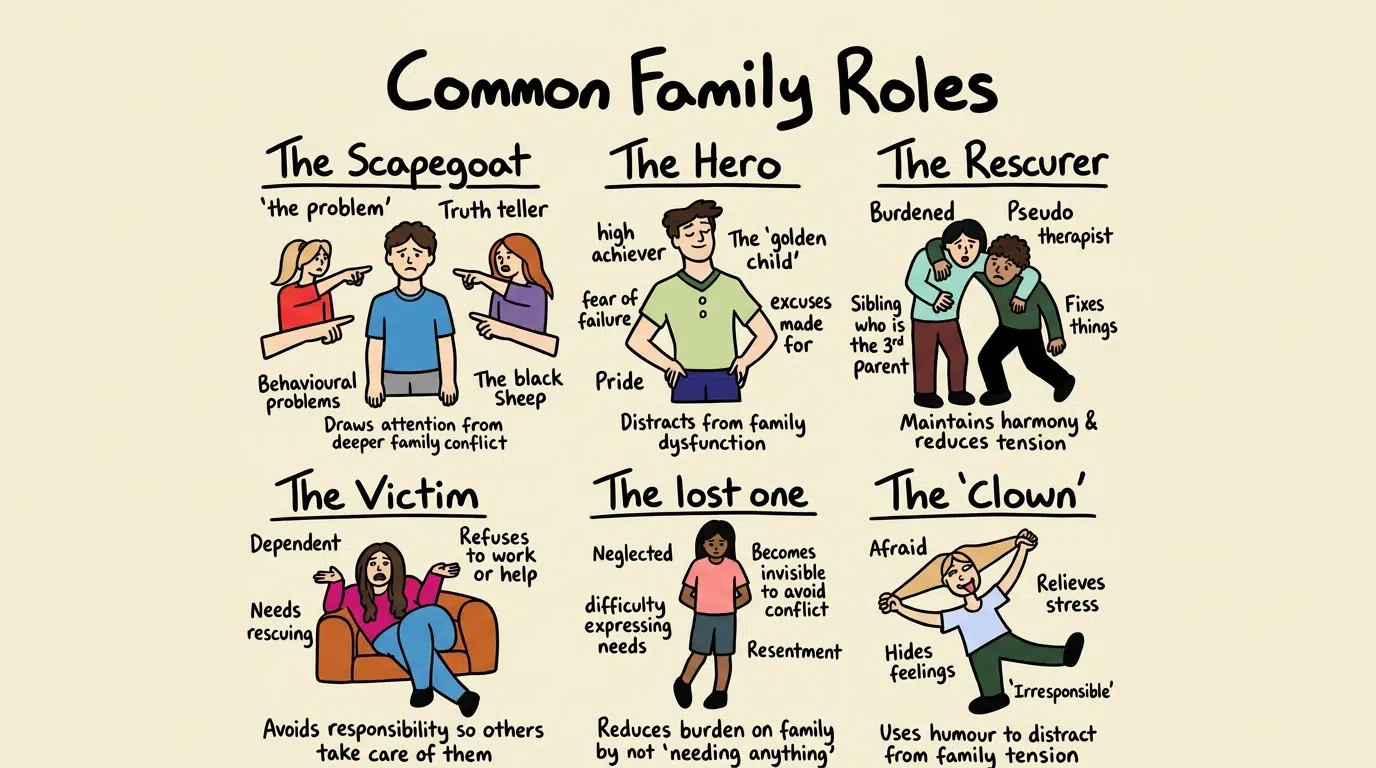



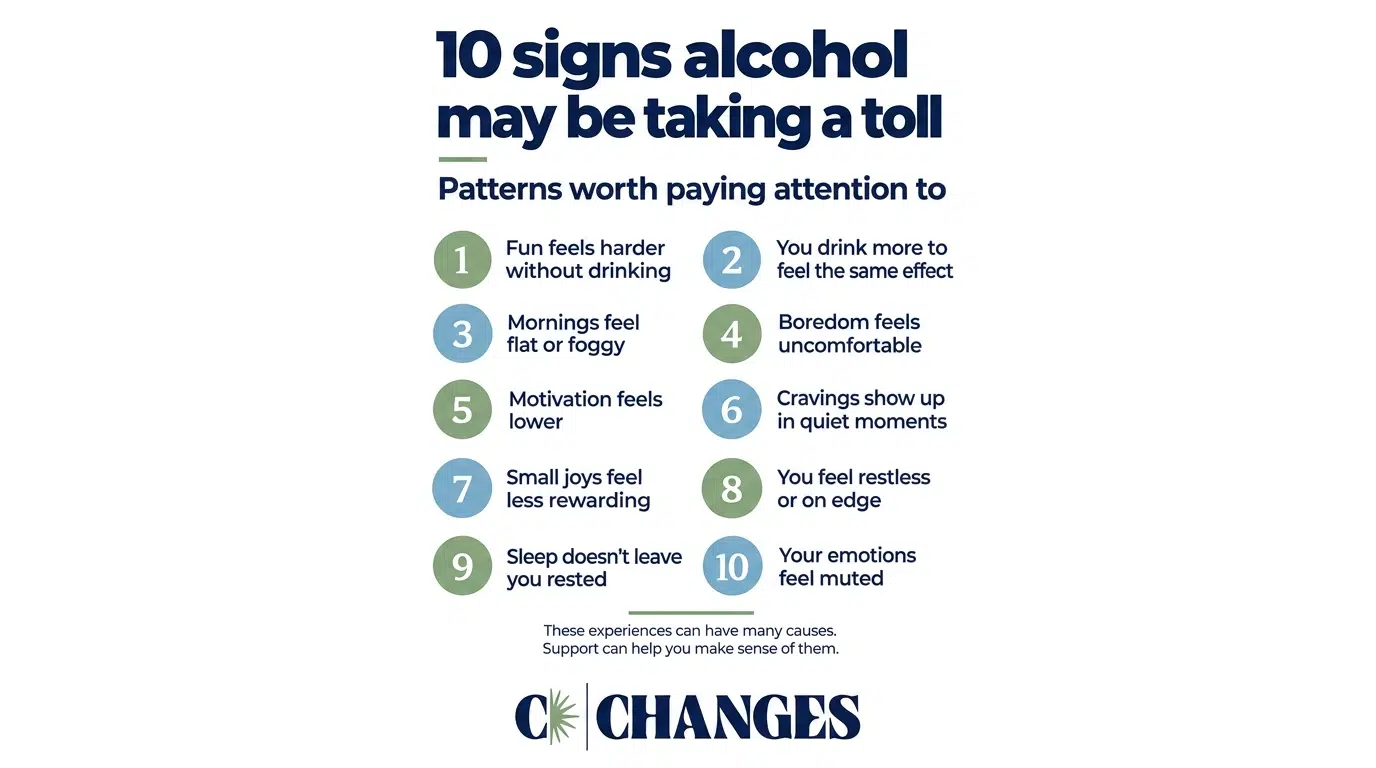

Addiction rarely affects only one person. When drugs or alcohol become part of a household, everyone in the family can start adapting to the stress, unpredictability, conflict, and fear around them. Over time, family members may fall into certain patterns simply to keep things functioning. Understanding these common family roles in addiction can help families recognize what has been happening beneath the surface and begin changing those patterns together.
These roles are not formal diagnoses, and no person fits perfectly into one category. Someone may take on different roles at different times. But the patterns can be useful for understanding how families try to survive an unstable situation.
Why Family Roles Develop Around Addiction
When addiction creates instability, families naturally look for ways to restore some sense of control.
One person may become the responsible one. Another tries to keep everyone calm. Someone else withdraws completely. Another family member may act out and draw attention away from what is happening underneath.
These behaviors are often unconscious survival responses rather than deliberate choices. They can temporarily reduce conflict or make the household feel more manageable, but over time they may also hide problems, reinforce unhealthy dynamics, and make honest communication more difficult.
Recognizing the role someone has taken on is not about assigning blame. It is about understanding what that person may have been trying to protect themselves or the family from.
The Scapegoat
The scapegoat often becomes known as “the problem” in the family.
They may struggle behaviorally, break rules, argue with family members, or openly challenge what others are trying not to discuss. Because their behavior attracts so much attention, deeper family conflict can remain in the background.
The scapegoat may be viewed as:
- The black sheep of the family
- The person causing problems
- A rule breaker
- The truth teller who says uncomfortable things
- The person blamed when family tension rises
Sometimes the scapegoat is expressing distress that the rest of the family has not been able to address directly. Focusing entirely on that person’s behavior can distract everyone from the addiction or other underlying problems affecting the household.
The Hero
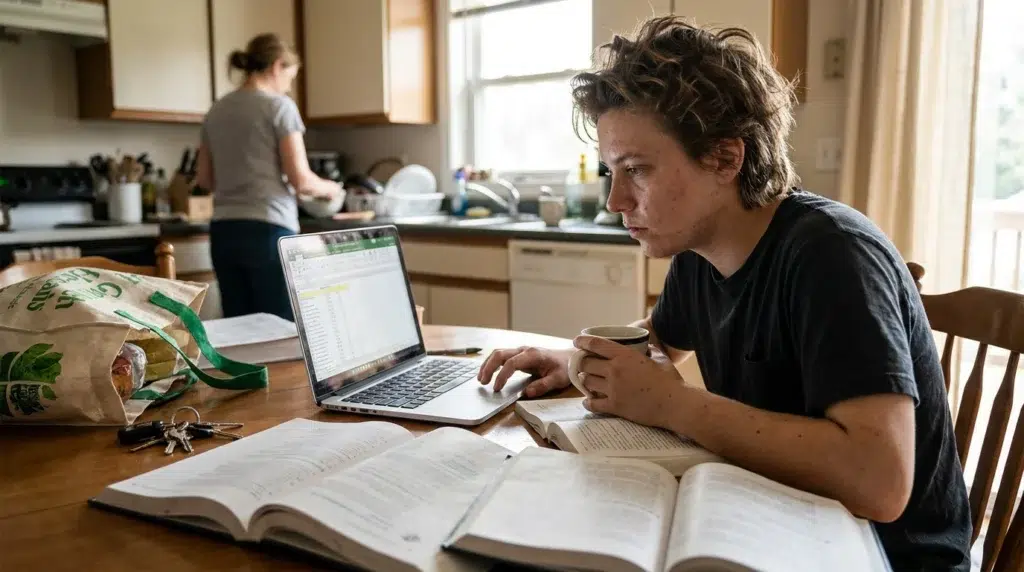
The hero tries to create stability through achievement and responsibility.
They may become the high achiever, the dependable child, or the person who appears to have everything together. In some families, they become the “golden child” whose accomplishments give everyone something positive to focus on.
The hero may:
- Become highly successful at school or work
- Take on responsibilities beyond their age
- Help care for siblings
- Try to make the family look stable from the outside
- Develop a strong fear of failure
- Base their self-worth on achievement
In some cases, the hero becomes almost like a third parent.
Their success can bring pride to the family and temporarily distract from dysfunction at home. But carrying that responsibility can become exhausting. Heroes may grow up believing that being useful, successful, or perfect is the only way to feel safe or valued.
The Rescuer
The rescuer feels responsible for keeping everyone together.
They may constantly step in when problems happen, fix situations for other people, smooth over arguments, or protect the person struggling with addiction from consequences.
The rescuer may become:
- The family peacekeeper
- The person everyone calls during a crisis
- A pseudo therapist for other family members
- Responsible for solving other people’s problems
- Emotionally burdened by everyone else’s needs
Their efforts often come from love and fear. They want to reduce tension and prevent things from getting worse.
But repeatedly fixing everything can create another problem. When someone is constantly protected from the consequences of their behavior, there may be less pressure for meaningful change.
Helping someone and protecting them from every consequence are not always the same thing.
Learning healthier boundaries can allow the rescuer to remain supportive without carrying responsibility for another person’s recovery.
The Victim
The victim role is often characterized by dependence and powerlessness.
Someone in this position may believe they cannot manage problems independently and may rely heavily on other family members to step in, make decisions, or handle responsibilities for them.
They may:
- Frequently need rescuing
- Depend heavily on other people
- Avoid certain responsibilities
- Resist attempts to become more independent
- Expect others to take care of difficult situations
This pattern can become self-reinforcing. The more others step in, the less opportunity the person has to practice handling challenges themselves.
Healing often means building confidence, accepting appropriate responsibility, and learning that support does not have to mean someone else doing everything for you.
The Lost One

The lost one responds very differently. Instead of attracting attention, they try to disappear.
They may stay quiet, spend large amounts of time alone, avoid conflict, and keep their needs to themselves because asking for anything feels like adding more stress to an already overwhelmed family.
The lost family member may experience:
- Feeling neglected or overlooked
- Difficulty expressing needs
- Emotional withdrawal
- Trouble asking for help
- Resentment that remains unspoken
- A tendency to become “invisible” during conflict
Their unspoken goal may become simple: do not create another problem.
That can reduce pressure on the family in the short term, but it can leave the person feeling disconnected, unseen, or unsure how to communicate their emotions later in life.
The Clown
The clown uses humor to relieve tension.
When conflict becomes uncomfortable, this person may joke, act silly, change the subject, or become entertaining enough to shift everyone’s attention.
The clown may:
- Use humor during stressful situations
- Hide fear or sadness behind jokes
- Be seen as irresponsible or unserious
- Distract others from family tension
- Try to make everyone feel better
Humor can be a healthy coping tool. But when it becomes the only way someone knows how to respond to distress, difficult feelings may never actually get expressed.
The person who makes everyone else laugh may still be carrying fear, loneliness, anger, or sadness underneath.
These Roles Can Overlap and Change
Family roles are not permanent personality types.
A person might be the hero in one situation and the rescuer in another. The lost child might later become the family peacekeeper. Someone who once acted as the scapegoat may eventually become the most direct person in the family about what needs to change.
Roles can also shift when addiction becomes more severe, when someone enters treatment, or when family relationships change.
The important question is not “Which label am I?”
A more useful question is, “What pattern did I learn to survive this situation, and does that pattern still help me now?”
That shift turns the conversation away from blame and toward change.
How Addiction Changes the Whole Family
Addiction can affect trust, communication, finances, responsibilities, routines, and emotional safety throughout a household.
Family members may begin organizing their lives around the person struggling with substance use. Plans change depending on that person’s condition. Conversations become focused on avoiding conflict. Money may disappear. Promises may repeatedly be broken.
Eventually, everyone can become stuck in reaction mode.
That is why recovery often needs to involve more than stopping substance use. The relationships surrounding addiction may also need attention.
Families may need to relearn how to:
- Communicate directly
- Set and respect boundaries
- Stop covering for harmful behavior
- Express difficult emotions
- Share responsibilities appropriately
- Rebuild trust gradually
- Separate support from rescuing
- Allow each person to have their own needs
These changes take time, particularly when unhealthy patterns have been present for years.
Why Boundaries Matter in Family Recovery
Boundaries are one of the most important parts of changing unhealthy family roles.
A healthy boundary identifies what someone is and is not responsible for.
For a rescuer, that might mean refusing to repeatedly fix problems caused by another person’s substance use. For the hero, it might mean recognizing that keeping the whole family stable is not their job. For the lost one, it may mean speaking up when something hurts rather than disappearing.
Boundaries are not about punishment or abandoning someone.
They help family members support one another without losing themselves in someone else’s choices.
How Family Therapy Can Help

Changing long-standing family dynamics can be difficult because the patterns often feel normal after years of repetition.
Therapy can create space for family members to recognize those patterns and practice healthier alternatives.
Depending on the family’s needs, that work may include:
- Understanding how addiction has affected each person
- Identifying unhealthy family roles
- Improving communication
- Establishing clearer boundaries
- Addressing resentment and unresolved conflict
- Rebuilding trust
- Learning how to support recovery without enabling substance use
- Helping family members focus on their own wellbeing
The goal is not to find one person responsible for everything that went wrong. It is to help the family build healthier ways of relating moving forward.
How Changes Supports Recovery Beyond the Individual
Recovery works best when the larger picture is addressed. At Changes, treatment is not limited to helping someone stop using drugs or alcohol. It also focuses on the emotional, behavioral, and relationship patterns that can influence long-term recovery.
Support may include:
- Individual therapy to explore substance use, emotional health, and personal patterns.
- Group therapy to build connection, accountability, and healthier communication.
- Psychiatric support when mental health conditions are also affecting recovery.
- Case management to help create greater structure and stability.
- Beyond Therapy programming to build healthier routines, interests, coping skills, and connection outside traditional therapy.
As the person in treatment begins changing, the family may also need to adjust. Healing becomes much more sustainable when everyone has space to develop healthier patterns.
Healing the Family Takes Time
Families usually do not develop these roles overnight, so they rarely disappear overnight either.
A rescuer may still feel an immediate urge to fix things. A hero may struggle to slow down. A lost family member may need time before speaking openly feels safe. The clown may instinctively reach for humor whenever emotions become uncomfortable.
Progress begins with noticing the pattern.
From there, each family member can begin asking what a healthier response might look like. That may mean setting one boundary, having one honest conversation, allowing someone else to solve their own problem, or finally asking for help.
Small changes can gradually reshape the entire family system.
Recovery does not only have the potential to change the life of the person struggling with addiction. It can create an opportunity for the whole family to communicate differently, rebuild trust, and move forward together.
Help Your Family Build Healthier Patterns
Addiction can reshape an entire household, but those patterns do not have to stay permanent. At Changes Treatment Center, we help people address substance use and the emotional and behavioral patterns surrounding it through PHP, IOP, outpatient care, therapy, psychiatric support, and Beyond Therapy programming. Located in Costa Mesa, California. Call (949) 807-2008 today to start building healthier patterns for recovery.
Frequently Asked Questions
What Are The Common Family Roles In Addiction?
Six commonly discussed family roles are the scapegoat, hero, rescuer, victim, lost one, and clown. Each represents a different way someone may respond to instability, conflict, or stress within a family affected by addiction. These roles are informal patterns rather than clinical diagnoses.
Why Do Families Develop Roles Around Addiction?
Family roles often develop as unconscious ways of coping with instability. One person may try to fix everything, another may achieve excessively, while someone else withdraws or uses humor to reduce tension. These patterns can temporarily make the family feel more stable but may become unhealthy over time.
Can Someone Have More Than One Family Role?
Yes. Family roles can overlap and change depending on the situation. Someone may act like the hero in one part of family life and become the rescuer in another. The goal is not to force someone into a label but to recognize patterns that may need to change.
How Does Addiction Affect The Entire Family?
Addiction can affect communication, trust, finances, routines, responsibilities, and emotional wellbeing throughout a household. Family members may begin adapting their behavior around the person using substances, which can create patterns that continue even after treatment begins.
Can Family Therapy Help With Addiction Recovery?
Yes. Family therapy can help loved ones understand how addiction has affected their relationships, identify unhealthy patterns, improve communication, establish boundaries, and rebuild trust. It can also help family members learn how to support recovery without taking responsibility for another person’s choices.