




Sometimes the signs that alcohol is becoming a problem aren’t dramatic. There’s no rock bottom, no missed work, no obvious crisis. You’re still showing up for your job and your family, and from the outside everything looks fine. But quietly, you’ve started to notice that alcohol is taking up more space in your life than you want it to. If that feels familiar, it’s worth paying attention to the subtle patterns that can signal alcohol is taking a toll, because these quieter signs often show up long before anything looks like a crisis.
When the Signs Are Subtle
Most people picture a drinking problem as something obvious and severe. The reality is that for many people, it looks nothing like that. Life still functions. Responsibilities still get met. That’s exactly what makes these signs so easy to overlook or dismiss.
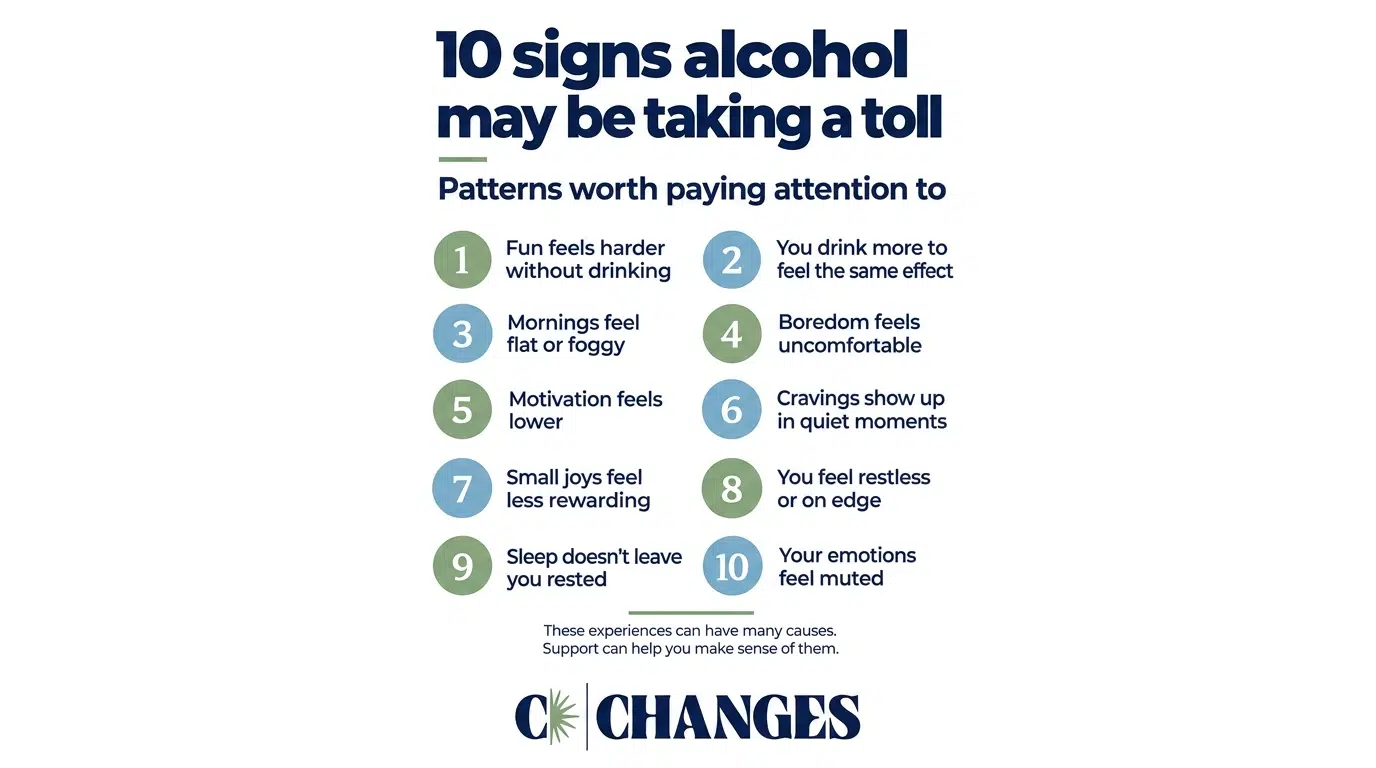
But functioning is not the same as being healthy. Alcohol can quietly affect your mood, sleep, energy, and mind long before it disrupts your outward life. The ten signs below are subtle patterns worth paying attention to. Noticing them doesn’t mean something is wrong with you, and it doesn’t require a label. They’re simply signals worth understanding.
1. Fun Feels Harder Without Drinking
One of the earliest signs is when socializing or relaxing starts to feel incomplete without a drink. Activities you used to enjoy feel flatter or harder to fully engage in when alcohol isn’t part of them. When drinking becomes tied to your ability to have fun or unwind, that’s a pattern worth noticing.
2. You Drink More to Feel the Same Effect
This is called tolerance, and it’s one of the clearest signs the body is adapting to alcohol. The amount that once relaxed you or gave you a buzz no longer does the job, so you find yourself drinking more to reach the same place. Rising tolerance isn’t a sign your body is handling alcohol well. It’s a sign of growing dependence.
3. Mornings Feel Flat or Foggy

If your mornings have started to feel dull, heavy, or mentally cloudy, alcohol may be playing a role. Even drinking that doesn’t leave a full hangover can affect how you feel the next day, leaving you foggy and off before the day has even begun. When flat, foggy mornings become a regular pattern, it’s worth considering what’s behind them.
4. Boredom Feels Uncomfortable
When you can’t sit with a quiet or boring moment without wanting a drink to fill it, that restlessness can be a subtle sign. If downtime consistently triggers the urge to drink, alcohol may have become a way to escape stillness rather than simply something you enjoy.
5. Motivation Feels Lower
A quiet drop in motivation and drive is another sign that’s easy to blame on other things. Alcohol affects the brain’s reward and motivation systems, and over time regular drinking can leave you feeling less driven, more sluggish, and less interested in pursuing your goals. If your get-up-and-go has quietly faded, alcohol could be a contributing factor.
Functioning is not the same as being healthy. Alcohol can take a toll long before it ever looks like a crisis.
6. Cravings Show Up in Quiet Moments
Cravings don’t always hit at parties or happy hours. Often they surface in the still, quiet moments, alone at home, in the evening, or when your mind finally slows down. When you notice yourself thinking about drinking during these ordinary quiet times, that’s a sign alcohol is occupying more mental space than you might realize.
7. Small Joys Feel Less Rewarding

This one is subtle but significant. When the small pleasures that used to bring you happiness, a good meal, time with friends, a favorite hobby, start to feel muted or less rewarding, alcohol may be dulling your brain’s ability to enjoy them. Clinicians call this reduced capacity for pleasure anhedonia, and it’s a recognized effect of regular drinking on the brain’s reward system.
8. You Feel Restless or On Edge
A persistent sense of restlessness, irritability, or being on edge, especially when you haven’t had a drink in a while, can be a sign your body has grown used to alcohol. This unease is part of how dependence quietly develops, as your nervous system starts to rely on alcohol to feel settled.
9. Sleep Doesn’t Leave You Rested

Alcohol has a reputation for helping people fall asleep, but it disrupts the deep, restorative stages of sleep the body actually needs. So you can sleep a full night and still wake up tired and unrefreshed. If your sleep has stopped feeling restorative, alcohol may be quietly undermining it.
10. Your Emotions Feel Muted
Finally, a sense of emotional flatness, where you feel numb or muted rather than fully experiencing your feelings, can be a sign alcohol is taking a toll. Alcohol can blunt the full range of emotions over time, leaving you feeling less connected to both the highs and the lows of everyday life.
These Experiences Can Have Many Causes
It’s important to be clear about something. Any one of these experiences can have many causes, from stress to sleep issues to other health factors, and noticing a few of them doesn’t automatically mean you have a drinking problem. Life is complicated, and these signs aren’t a diagnosis.
But if several of them feel familiar, and if you’ve noticed alcohol taking up more space than you’d like, that’s worth paying attention to. You don’t have to figure out exactly what it means on your own. Support can help you make sense of these patterns, whatever is behind them.
You Don’t Need All the Answers to Reach Out
Here’s the most important part. If this feels familiar, you don’t need to have all the answers before reaching out. You don’t need to have hit a crisis, earned a label, or decided what you want to do. You just need to be willing to start a conversation.
That’s the way we approach it at Changes. We’re here to listen and help you explore what support could look like, without pressure or judgment. A few of the ways that support comes together:
- A judgment-free conversation to help you make sense of what you’ve been noticing.
- Individual therapy to explore your relationship with alcohol and what you want it to be.
- Group therapy with others who recognize these same subtle patterns.
- Medical and psychiatric support for the sleep, mood, and anxiety issues tied to drinking.
- Flexible outpatient care that fits around your work and family, so getting support doesn’t upend your life.
Paying Attention Is a Sign of Strength
Noticing these patterns and being honest with yourself about them isn’t a weakness. It’s self-awareness, and it’s often the first step toward feeling better. Alcohol doesn’t have to reach a crisis point for it to be worth examining its role in your life.
If several of these signs resonate, consider it an invitation, not an alarm. An invitation to get curious, to reach out, and to explore what a healthier relationship with alcohol might feel like. You deserve to feel rested, motivated, connected, and fully present, and support is here whenever you’re ready.
Call Today to Make Sense of What You’re Noticing
If alcohol has started taking up more space than you want, you don’t need all the answers to reach out. At Changes Treatment Center, we’re here to listen and help you explore what support could look like through PHP, IOP, outpatient treatment, therapy, psychiatric care, and Beyond Therapy programming. Located in Costa Mesa, California. Call (949) 807-2008 today and start the conversation, with people who will listen without judgment.
Frequently Asked Questions
What are the subtle signs alcohol is becoming a problem?
Subtle signs include fun feeling harder without drinking, needing more to feel the same effect, flat or foggy mornings, discomfort with boredom, lower motivation, cravings in quiet moments, small joys feeling less rewarding, restlessness, unrefreshing sleep, and muted emotions. These patterns often appear long before any obvious crisis.
Can you have a drinking problem even if you’re still functioning?
Yes. Many people continue meeting their work and family responsibilities while alcohol quietly affects their mood, sleep, energy, and mind. Functioning is not the same as being healthy, and these subtle signs can appear well before drinking disrupts someone’s outward life. This is sometimes called high-functioning drinking.
Why do small joys feel less rewarding when I drink regularly?
Regular alcohol use can affect the brain’s reward system, dulling its ability to feel pleasure from everyday activities. Clinicians call this reduced capacity for enjoyment anhedonia. It’s a recognized effect of alcohol, and many people notice that everyday pleasures feel muted, then return as they cut back.
Do these signs mean I definitely have an alcohol problem?
Not necessarily. Any one of these experiences can have many causes, including stress, poor sleep, or other health factors, so noticing them isn’t a diagnosis. But if several feel familiar and alcohol is taking up more space than you’d like, it’s worth paying attention to and exploring with support.
How can Changes Treatment Center help me?
We’re here to listen without judgment and help you make sense of what you’ve been noticing, whatever is behind it. Through a supportive conversation, individual and group therapy, medical and psychiatric care, and flexible outpatient programs, we help you explore your relationship with alcohol and what support could look like. You don’t need all the answers to reach out.