



Counterfeit pills do not always look dangerous. Some are designed to resemble familiar prescription medications, while others may appear in bright colors that can look harmless at first glance.
That is what makes brightly colored fentanyl and counterfeit pills especially concerning for parents and families. A pill obtained from a friend, classmate, online seller, or social media source may contain illegally manufactured fentanyl even when the person taking it believes they are getting something else.
The safest rule is simple: if a medication was not prescribed to you and dispensed by a licensed pharmacy, do not take it.
What Is Rainbow Fentanyl?
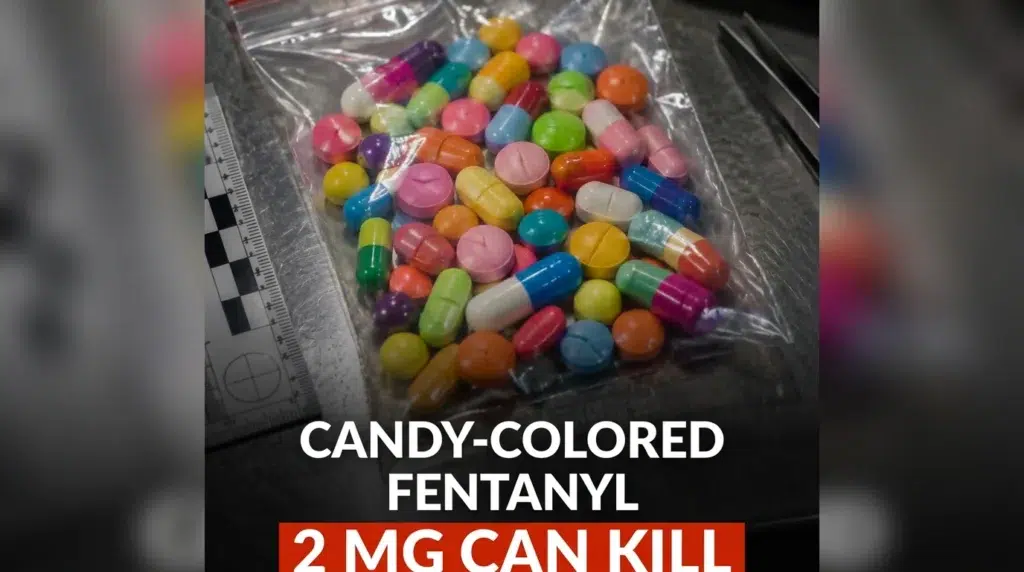
“Rainbow fentanyl” is a term used for illegally manufactured fentanyl that appears in brightly colored pills, powders, or other forms.
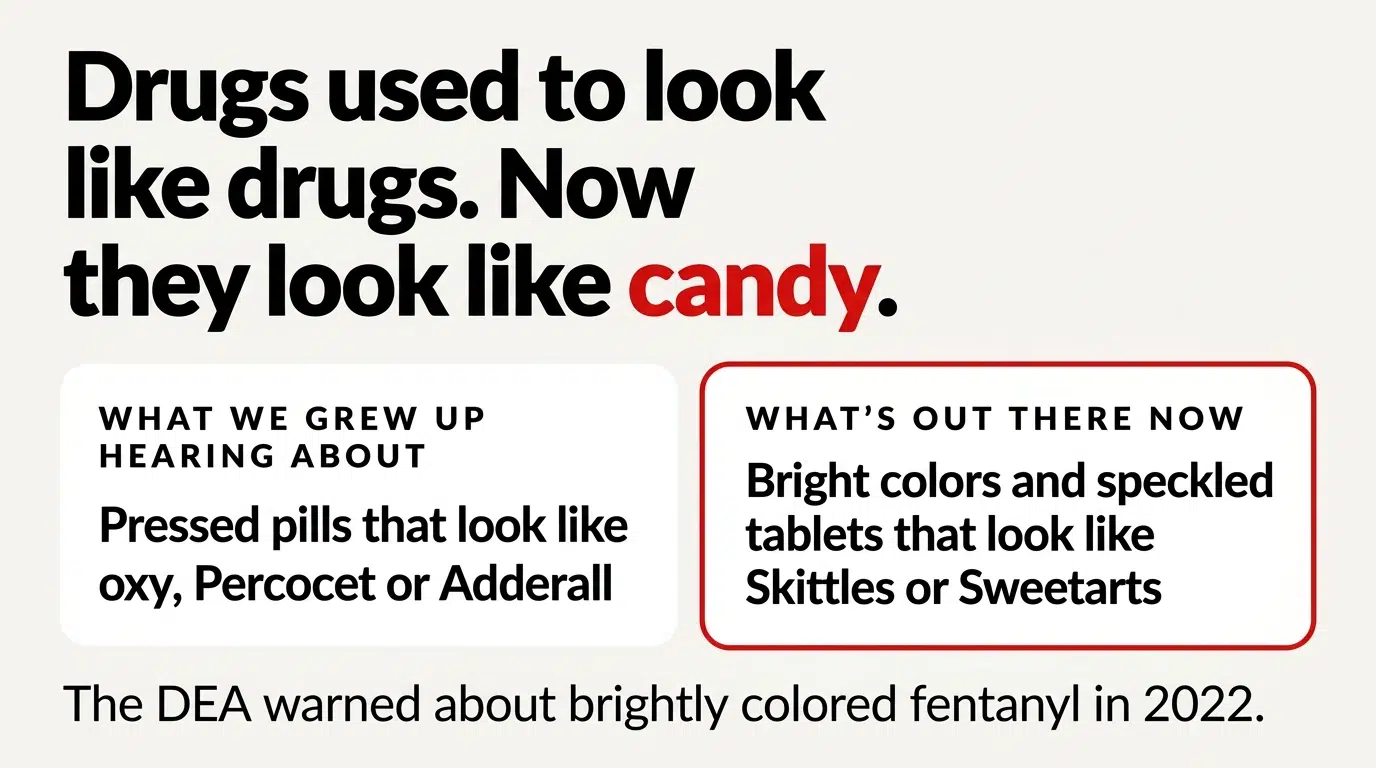
The DEA first issued a nationwide warning about brightly colored fentanyl in 2022 after seizures occurred across multiple states. Its laboratories later reported that the color of a fentanyl pill does not indicate how potent it is. Different colors should not be treated as safer or more dangerous than others.
What matters is that illegally manufactured pills can contain an unpredictable amount of fentanyl.
A person cannot reliably determine what is in a counterfeit pill simply by looking at its shape, color, markings, or packaging.
Fake Pills Can Look Like Familiar Medications
Counterfeit pills are frequently manufactured to resemble legitimate prescription drugs.
They may be sold as medications such as:
- Oxycodone
- Percocet
- Xanax
- Adderall
- Other commonly recognized prescription pills
That familiarity can create a false sense of safety.
Someone may believe they are taking a prescription medication when the pill was actually manufactured illegally and contains fentanyl, methamphetamine, or another unexpected substance.
The DEA continues to warn that counterfeit pills containing fentanyl are widely available and that pills purchased through social media or other illicit sources should never be assumed to be legitimate.
Why Brightly Colored Pills Can Be Misleading
Many people grew up thinking dangerous drugs would be easy to recognize.
Today, that assumption is risky.
Illicit pills can appear professionally pressed, carry markings similar to legitimate medications, or come in bright colors. Some multicolored pills may even resemble candy at a quick glance.
But appearance does not tell you what a pill contains.
A brightly colored tablet is not automatically fentanyl, and a plain-looking pill is not automatically safe.
The real issue is the source.
If a pill did not come from a licensed pharmacy for the person whose name is on the prescription, its contents should be considered unknown.
Can 2 Milligrams of Fentanyl Be Deadly?
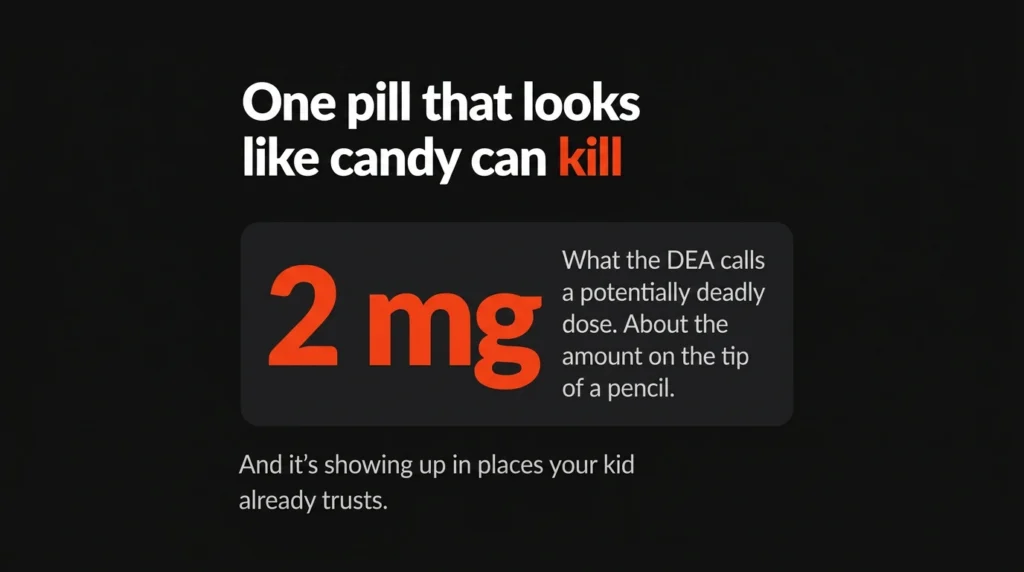
Yes. The DEA describes approximately 2 milligrams of fentanyl as a potentially deadly dose, although the effect depends on factors such as a person’s opioid tolerance, body size, and the actual concentration of fentanyl present.
That amount is extremely small.
The problem with illegally manufactured pills is that fentanyl may not be evenly distributed during production. One pill may contain far more fentanyl than another pill that looks exactly the same.
There is no reliable way to tell the amount of fentanyl inside a counterfeit pill by looking at it.
A pill that looks familiar does not mean the ingredients or dose are familiar.
This unpredictability is one reason counterfeit pills carry such a high overdose risk.
Social Media Has Changed How Young People Can Encounter Drugs
Drug access is no longer limited to traditional street-level dealing.
The DEA warns that traffickers use social media and smartphones to advertise and sell counterfeit pills and other illicit drugs. Young people may encounter sellers through social platforms, private messages, disappearing posts, or other online communication.
This creates a dangerous situation because someone may believe they are buying a real prescription medication from another person.
Instead, they may receive a counterfeit pill containing fentanyl.
Parents should make sure young people understand that:
- A pill from a friend is not automatically safe.
- A pill purchased online is not automatically legitimate.
- A photo of pharmaceutical packaging does not prove the medication is real.
- A familiar pill marking does not confirm what is inside.
- Pills purchased through social media should never be considered safe.
The DEA’s current guidance for parents specifically warns against taking pills purchased through social media and recommends explaining the danger of counterfeit pills directly to children and teenagers.
The Safest Rule for Prescription Pills
There is one rule families can make very clear:
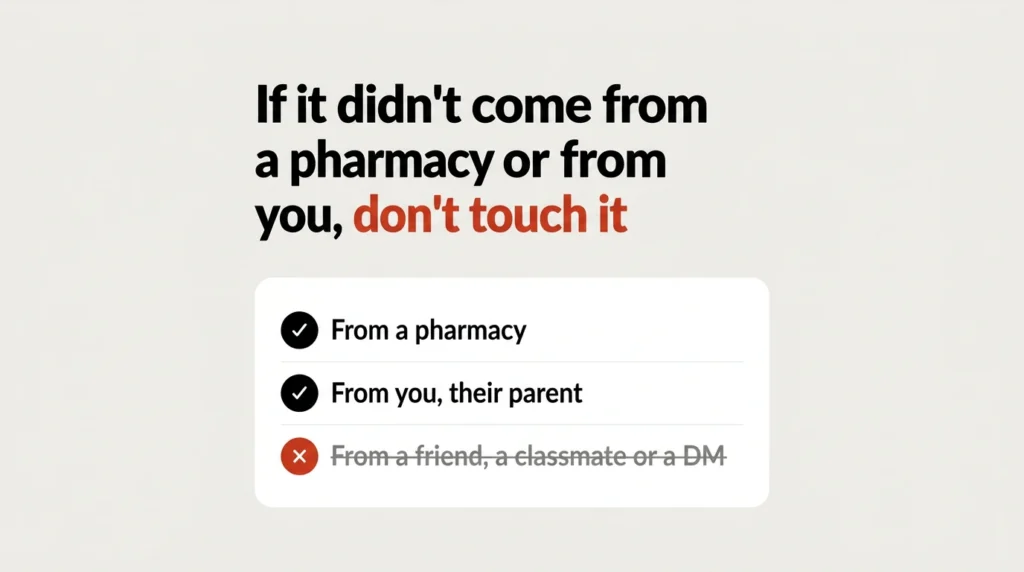
Only take medication that was prescribed specifically for you and dispensed by a trusted, licensed pharmacy.
Do not take prescription-looking pills obtained from:
- Friends
- Classmates
- Parties
- Online sellers
- Social media contacts
- Someone else’s prescription bottle
- Unknown sources
Even if the pill looks identical to something from a pharmacy, appearance cannot confirm what it contains.
FDA guidance also recommends obtaining medications through state-licensed pharmacies to reduce the risk of counterfeit drugs.
Talk to Your Kids Clearly and Repeatedly
A single conversation about fentanyl may not be enough.
Parents can make drug safety part of an ongoing conversation rather than waiting until there is a crisis.
Keep the message straightforward.
You might explain:
- Counterfeit pills can look like real medications.
- Fentanyl can be present without the person knowing it.
- Pills obtained from friends or social media should never be taken.
- One person’s reaction to a pill does not prove another pill is safe.
- Calling for help during an overdose is more important than worrying about getting in trouble.
- Naloxone can reverse an opioid overdose and should be used when one is suspected.
The goal is not simply to frighten young people.
It is to give them information they can use when they are under pressure, curious, or confronted with a pill someone claims is harmless.
Create an Exit Plan Before They Need One
Young people may know that something is risky and still struggle to say no when the situation actually happens.
An exit plan gives them a way out.
For example, families can agree that a child or teenager can:
- Call or text a parent at any time for a ride
- Use a predetermined code word when they need help leaving
- Blame the parent if they need an excuse
- Leave without being interrogated in front of friends
- Ask for help without immediately being punished
DEA guidance specifically recommends helping young people develop an exit plan for situations where they may be pressured to take pills or other drugs.
Making that plan before the situation happens can make it easier to use when judgment is under pressure.
Know the Signs of an Opioid Overdose
Families should also know what an opioid overdose can look like.
Possible signs include:
- Very slow, irregular, or stopped breathing
- Being unable to wake the person
- Extreme sleepiness or loss of consciousness
- Pinpoint pupils
- Limpness
- Pale, blue, gray, or discolored lips or skin
- Choking, snoring, or gurgling sounds
If an opioid overdose is suspected, call 911 immediately and administer naloxone if it is available.
Naloxone can temporarily reverse the effects of an opioid overdose and is safe to give when an opioid overdose is suspected. CDC guidance encourages families and communities to carry it because rapid action can save a life.
One Experiment Can Carry Serious Risk

Experimentation with substances has always involved risk, but counterfeit pills have changed the calculation.
Someone may believe they are experimenting with a familiar medication without realizing fentanyl is present.
That means a person does not need to have an established opioid addiction to experience a fentanyl overdose.
This is why conversations about counterfeit pills should not be limited to people already known to use opioids.
Teenagers and young adults who would never intentionally seek fentanyl can still be exposed if they take an illegally manufactured pill sold as something else.
What Parents Should Do If They Are Concerned
If you suspect your child or another family member may be using pills or other substances, approach the situation directly but calmly.
Try to focus on safety rather than immediately turning the conversation into punishment.
You can:
- Ask what they have taken and where it came from
- Discuss counterfeit pill risks
- Keep naloxone available
- Secure medications in the home
- Dispose of unused medications appropriately
- Monitor changes in behavior without jumping to conclusions
- Seek a professional substance use assessment when needed
- Contact emergency services immediately if an overdose is suspected
Early conversations can create opportunities for intervention before substance use becomes more severe.
Education Can Save Lives
The illicit drug supply has changed significantly.
Parents cannot rely on what drugs looked like when they were younger, and young people cannot rely on appearances, pill markings, packaging, or what a seller claims.
Counterfeit pills may look legitimate.
Illegally manufactured fentanyl may appear in different colors and forms.
Drug sellers may use social media to reach potential buyers.
And extremely small amounts of fentanyl can be dangerous.
That makes education one of the most important tools families have.
Talk about counterfeit pills before your child encounters one. Make sure they know where medication should come from. Teach them what to do if a friend overdoses. Keep communication open enough that asking for help feels possible.
Staying informed cannot eliminate every risk, but it can give families a better chance to recognize danger before it becomes a tragedy.
Get Help With Substance Use and Fentanyl Concerns
If you are worried about your own substance use or someone you love, you do not have to figure out the next step alone. At Changes Treatment Center, we provide fentanyl addiction treatment through PHP, IOP, outpatient care, therapy, psychiatric support, and Beyond Therapy programming.
Located in Costa Mesa, California. Call (949) 807-2008 for a confidential conversation about treatment, education, and available support.
Frequently Asked Questions
What Is Rainbow Fentanyl?
Rainbow fentanyl refers to illegally manufactured fentanyl produced in brightly colored pills, powders, or other forms. The DEA began warning about multicolored fentanyl in 2022. Color does not indicate how potent the fentanyl is.
Can Fentanyl Pills Look Like Candy?
Some brightly colored illicit pills can resemble candy at a glance, but appearance alone cannot identify fentanyl. More importantly, counterfeit pills can also closely resemble legitimate prescription medications. Any pill obtained outside a licensed pharmacy should be considered unsafe to take.
Is 2 Milligrams of Fentanyl Deadly?
The DEA describes about 2 milligrams as a potentially deadly dose, depending on factors including opioid tolerance and individual characteristics. Counterfeit pills are especially dangerous because the amount of fentanyl inside them can vary significantly.
Can Counterfeit Pills Be Bought Through Social Media?
Yes. DEA guidance warns that drug traffickers use social media and smartphones to advertise and sell counterfeit pills. A pill bought through social media should never be assumed to contain the medication the seller claims it does.
What Should I Tell My Child About Counterfeit Pills?
Keep the message simple: never take a prescription pill that was not prescribed specifically for you and dispensed by a licensed pharmacy. Explain that fake pills may contain fentanyl, pills obtained from friends or social media are unsafe, and they should immediately seek help if someone appears to be overdosing.