







Yes, live resin shows up on a drug test. It’s rich in THC, which your body converts to THC-COOH, the inactive metabolite that standard urine screens detect. Tests don’t identify “live resin” specifically; they flag THC exposure above a fixed cutoff. Because live resin’s potency runs high, you’re more likely to surpass that threshold. Your detection window depends on frequency, body fat, and test type, factors worth understanding before you interpret any result.
Key Takeaways
- Yes, live resin contains THC, which produces the THC-COOH metabolite that standard drug tests detect.
- Drug tests cannot identify live resin specifically; they only confirm exposure to THC-containing products.
- Detection lasts about 3 days for occasional users but 30 days or longer for heavy users.
- Live resin’s high THC potency increases the likelihood of surpassing test cutoffs and extending detection windows.
- Body fat, lipid solubility, frequency of use, and test type all influence how long THC remains detectable.
Does Live Resin Show Up on a Drug Test

Yes, live resin shows up on a drug test. Because live resin is a cannabis concentrate containing THC, it produces THC-COOH, the inactive metabolite that standard urine screens detect. Drug tests don’t look for “live resin” specifically, they screen for THC metabolites, so does live resin show on drug test questions come down to whether the product contains THC. Since live resin often carries very high THC levels, it can easily reach or exceed test cutoffs.
Will live resin show up on a drug test depends on your dose, frequency, body composition, and test type. How long does live resin stay in your system varies: roughly 3 days for occasional users, up to 30 days for chronic use.
How Long Does Live Resin Stay in Your System and What Factors Change Detectability
Live resin stays in your system for about three days after a single use, though heavy, chronic users can test positive for 30 days or beyond. How long it stays depends on which test you’re facing and how your body processes THC. Since live resin contains concentrated THC, your body metabolizes it into THC-COOH, the compound urine tests detect.
Several factors change your detectability. Frequency of use matters most, and daily consumption extends detection significantly. Your body fat affects retention too, since THC’s lipid solubility lets metabolites linger in fatty tissue. Product potency plays a role, and live resin’s high THC concentration works against you here. Blood and saliva tests show shorter windows, while hair testing detects use for months. How long vape oil stays detectable depends on individual factors and consumption method, helping users make informed choices around drug testing.
What Can and Cannot a Standard Cannabis Drug Test Tell You About Live Resin Use
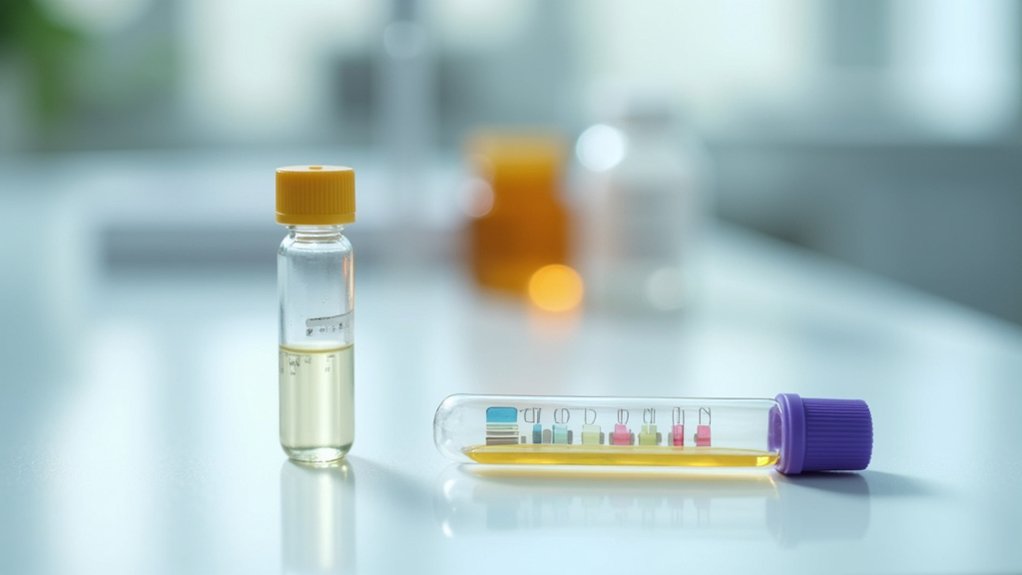
A standard cannabis drug test can tell you that THC-COOH is present above the cutoff, but it cannot tell you what you consumed. THC-COOH is the inactive metabolite your body produces after processing any THC-containing product. The screen registers metabolite concentration against a fixed cutoff, so it won’t distinguish live resin from flower, edibles, or dabs.
| What It Can Tell You | What It Can’t Tell You |
|---|---|
| THC-COOH is present above cutoff | Which product you used |
| Recent or chronic exposure range | Exact dose consumed |
| Whether you exceed the threshold | Live resin’s specific potency |
| Approximate detection window | Method of consumption |
| Positive or negative result | Impairment at test time |
The test measures metabolites, not product identity, so any THC source, including high-potency live resin, produces an indistinguishable positive result after you cross the threshold. Differences between blood and urine tests affect result interpretation, with blood showing recent use and urine detecting substances stored longer.
How Can THC Content Vary Across Live Resin Products
THC content varies across live resin products because “live resin” describes an extraction method, flash-freezing fresh cannabis to preserve terpenes and cannabinoids, not a fixed potency. Because of this, THC concentrations can range widely, often far exceeding standard flower. This variation directly affects your drug test risk.
You can’t assume potency from the label alone. Some products contain concentrated THC that easily pushes you past standard test cutoffs, while others may differ based on the source strain and processing. Check the certificate of analysis to confirm actual cannabinoid content.
Regardless of the number, any THC-containing live resin produces the same THC-COOH metabolite that standard urine screens detect, making potency a risk multiplier.
How Can Frequency of Use Affect a Live Resin Test Result

Frequency of use ranks among the strongest predictors of whether you’ll test positive after consuming live resin. When you use it occasionally, THC-COOH typically clears from urine within about three days, since your body doesn’t accumulate significant metabolite reserves. Chronic daily use changes this dramatically. THC is lipid-soluble, so repeated exposure saturates your fat tissue, creating a reservoir that releases metabolites slowly over time. Heavy users can test positive for 30 days or longer, even after stopping. This happens because you’re storing far more THC than your body can eliminate between sessions. Given live resin’s high potency, frequent dabbing or vaping accelerates this buildup. So if you use regularly, expect detection windows on the longer end. There’s no reliable shortcut to clearance.
Why Can the Effects of Live Resin End Long Before THC Metabolites Are No Longer Detectable
The effects of live resin end long before THC metabolites are undetectable because your body handles the psychoactive compound and its byproducts differently. When you dab, THC hits your bloodstream fast and binds to cannabinoid receptors, producing the high you feel. That psychoactive effect fades within hours as THC redistributes into your tissues. But here’s the catch: your liver metabolizes THC into THC-COOH, an inactive metabolite that doesn’t get you high, yet it’s exactly what urine tests detect. Because THC is lipid-soluble, it stores in your fat cells and releases slowly over time. So while the effects end quickly, your body keeps excreting detectable THC-COOH for days or weeks afterward. The duration of how long weed pen highs last typically ranges from one to three hours, depending on potency and individual response.
What Should You Know Before Interpreting a Positive Cannabis Test
A positive cannabis test detects THC-COOH, the inactive metabolite, not the “live resin” you consumed or the high you felt days earlier. A positive screen confirms prior THC exposure, but it can’t pinpoint when you used, how much you took, or whether you were impaired at testing.
- Detection reflects history, not impairment. THC-COOH lingers in urine long after psychoactive effects end, so a positive result doesn’t indicate current intoxication.
- Cutoffs determine outcomes. Standard urine screens use a 50 ng/mL threshold; confirmatory GC-MS testing applies stricter cutoffs to reduce false positives.
- Individual variability matters. Your frequency, dose, body fat, and metabolism all shape whether you exceed those cutoffs.
Marijuana Addiction Treatment at Changes Treatment Center
Changes Treatment Center in Costa Mesa provides structured care for adults dealing with marijuana and other substance use disorders through Partial Hospitalization (PHP), Intensive Outpatient (IOP), outpatient treatment, therapy, psychiatry, and aftercare and support groups. Care is available for people who are struggling to cut back or stop frequent use of marijuana, live resin, carts, concentrates, or other THC products. Call (949) 807-2008 to speak with the admissions team about available treatment options.
Frequently Asked Questions
Can Secondhand Cannabis Smoke Cause a Positive Live Resin Drug Test?
You’re unlikely to fail a drug test from secondhand cannabis smoke under realistic conditions. Standard urine tests screen for THC-COOH using cutoffs (typically 50 ng/mL) that casual passive exposure rarely reaches. You’d need extreme, prolonged exposure in an unventilated space to approach detection thresholds, and even then, positives are uncommon. Since drug tests detect THC metabolites regardless of source, live resin isn’t distinguished, but ordinary secondhand exposure won’t realistically trigger a positive.
Does Cbd-Only Live Resin Trigger a Positive THC Drug Test?
Pure CBD-only live resin shouldn’t trigger a positive THC drug test, since standard screens target THC-COOH, not CBD. But here’s the catch: many “CBD” products contain trace THC, and full-spectrum extracts legally include up to 0.3% THC. If you’re using those regularly, that residual THC can accumulate and push you over test cutoffs. You’re only truly safe with verified THC-free isolates confirmed by a certificate of analysis.
Are There Legal Protections for Medical Cannabis Users Who Test Positive?
You’ve got limited and inconsistent protections, since they depend heavily on your jurisdiction. Some states legally shield registered medical cannabis patients from employment discrimination, but many don’t, and federal law offers you no protection at all. Even in protective states, safety-sensitive positions and federally regulated jobs typically override these rights. Your certification won’t change a test’s chemistry either, it’ll still detect THC-COOH. Always verify your specific state statutes and employer policies before assuming you’re covered.
Can Detox Drinks or Home Remedies Help Pass a Test?
You can’t reliably beat a THC test with detox drinks or home remedies. These products may temporarily dilute your urine, lowering metabolite concentration below cutoffs, but labs detect dilution through creatinine and specific gravity checks, often flagging or invalidating your sample. Remedies like cranberry juice, vinegar, or niacin don’t accelerate THC-COOH clearance from fat stores. Since THC’s lipid-soluble and eliminated slowly, only genuine abstinence over time truly reduces detectable metabolites.
Do At-Home Drug Tests Detect Live Resin as Accurately as Labs?
At-home tests won’t match lab accuracy, but they’ll still detect live resin’s THC metabolites. Both screen for THC-COOH, so your home kit can flag prior use reliably near its cutoff, typically 50 ng/mL. However, labs confirm positives with GC-MS, delivering precise quantification and fewer false results. Home tests only give qualitative pass/fail readings, so you’re more likely to get borderline errors. For dependable results, you’ll want laboratory confirmation.