






7-OH and kratom aren’t the same exposure. Kratom is the whole Mitragyna speciosa leaf or extract, dominated by mitragynine, while 7-OH is a single opioid-active alkaloid usually present only in trace amounts. Your liver can oxidize some mitragynine into 7-OH through CYP3A enzymes, but concentrated 7-OH products deliver far more receptor activity per milligram. That changes potency, sedation, tolerance, withdrawal, and overdose-like risk, and the details below show how to tell them apart.
Key Takeaways
- 7-OH is a single alkaloid linked to kratom; kratom is the whole Mitragyna speciosa plant product.
- Natural kratom usually contains mostly mitragynine, with 7-OH present only in trace amounts.
- Marketed 7-OH products are often isolated, concentrated, semi-synthetic, or synthetic rather than ordinary botanical kratom.
- 7-OH binds opioid receptors more strongly and can cause stronger sedation, euphoria, analgesia, and respiratory effects by weight.
- Kratom and 7-OH should not be treated as interchangeable because potency, exposure, tolerance, withdrawal, and overdose risks can differ.
What is the difference between 7-OH and kratom
7-OH is a single alkaloid associated with Mitragyna speciosa, while kratom is the whole plant product from Mitragyna speciosa. Kratom leaf, powder, tea, or capsules contain a mixture of kratom alkaloids, dominated by mitragynine, with 7-OH usually present only in trace amounts. Marketed 7-OH products often contain isolated, concentrated, semi-synthetic, or synthetic material, not botanical kratom.
That chemical difference changes potency and risk. 7-OH binds opioid receptors more strongly than mitragynine and can produce stronger sedation, analgesia, euphoria, and respiratory effects by weight. So you shouldn’t treat purified 7-OH, kratom extracts, and whole-leaf kratom as interchangeable exposures in safety assessments. State laws on 7-oh vary significantly across different regions, influencing how substances like kratom are regulated. In some states, 7-oh may be classified differently than kratom products, impacting their legal status and availability.
How does your liver turn mitragynine into 7-OH
Your liver turns mitragynine into 7-OH by using enzymes, especially cytochrome P450 3A isoforms, to oxidize mitragynine at the 7-position. That oxidation adds a hydroxyl group, producing 7-hydroxymitragynine, often shortened to 7-OH.
This metabolism matters because 7-hydroxymitragynine binds opioid receptors more strongly than mitragynine. You don’t convert all mitragynine into 7-OH, studies suggest this pathway forms a limited but pharmacologically important metabolite. Enzyme activity can vary with genetics, liver function, other drugs, and dose, so your internal 7-OH exposure may differ from someone else’s even after similar kratom intake. This conversion helps explain why effects don’t always track leaf content alone.
Which products count as kratom and which count as 7-OH
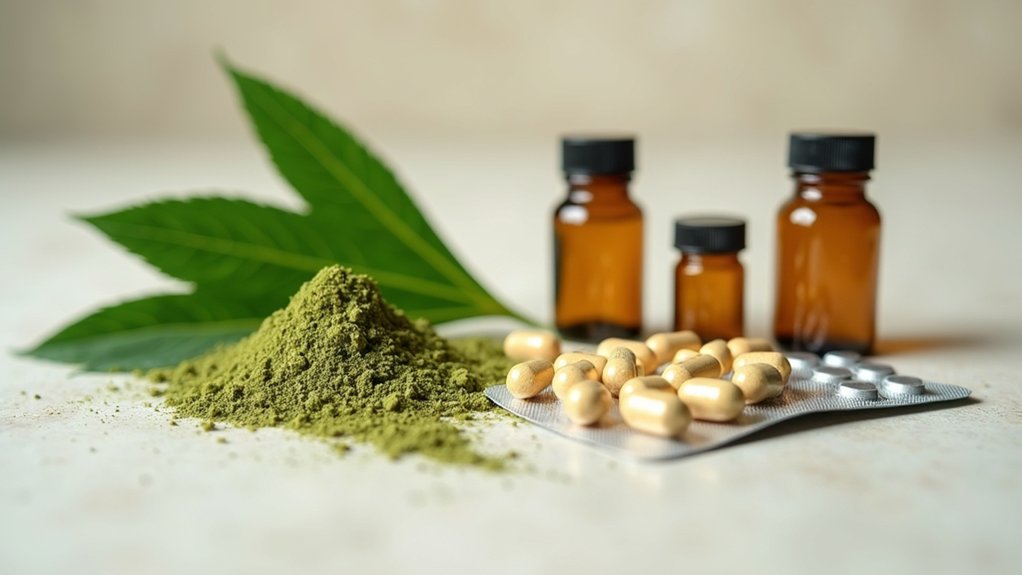
Kratom products include natural leaf powder, capsules made with milled leaf, crushed-leaf tea, and broad-spectrum botanical extracts, while 7-OH products are those labeled with 7-hydroxymitragynine, enhanced alkaloids, or specific milligrams of 7-OH. 7oh tablets overview and uses can help users understand the benefits and effects of this specific alkaloid. Many individuals seek out 7-OH tablets for their potential analgesic properties and mood enhancement.
| Product image | Classification |
|---|---|
| Green leaf powder in a pouch | kratom |
| Capsules filled with milled leaf | kratom |
| Brewed crushed-leaf tea | kratom |
| Resinous broad-spectrum extract | kratom |
| Small tablet labeled 7-hydroxymitragynine | 7-OH |
Natural kratom carries dozens of alkaloids, with mitragynine dominant and 7-OH usually trace. If a label highlights milligrams of 7-OH, “enhanced” alkaloids, or purified 7-hydroxymitragynine, you shouldn’t treat it as ordinary botanical kratom.
What does mitragynine do that 7-OH does not
Mitragynine has broader receptor activity than 7-OH. It is the dominant kratom alkaloid, not the trace metabolite 7-hydroxymitragynine. Mitragynine appears to act as a partial, biased µ-opioid receptor agonist while also interacting with adrenergic, serotonergic, and other receptor systems. That broader pharmacology helps explain why lower kratom doses can feel more alerting rather than purely sedating.
Why do sellers and headlines treat 7-OH and kratom as one thing
Sellers and headlines treat 7-OH and kratom as one thing because 7-OH is associated with the kratom plant. You’ll often see that shortcut because 7-hydroxymitragynine occurs naturally as a minor alkaloid, while mitragynine dominates the leaf’s alkaloid profile. That shared origin lets marketers frame concentrated 7-OH as “kratom-derived,” even when the product isn’t botanical kratom. Headlines also simplify chemistry into a single public-facing label, because plant name recognition travels faster than alkaloid-specific detail. Mechanistically, though, the category blurs two exposures, a whole plant matrix with many alkaloids versus a purified or enriched compound. When you read labels, you need to separate source language from composition, concentration, and manufacturing method. Those determine what the substance actually is.
Why does the distinction matter if you have been using both
The distinction matters because kratom and 7-OH can expose your body to very different opioid-receptor activity, even if you have been using both or sellers group them under the same label. Botanical kratom contains many alkaloids, with mitragynine dominant and 7-hydroxymitragynine usually present only in trace amounts. Concentrated 7-OH products can deliver far more receptor stimulation per milligram. Benefits of 7OH versus kratom may include faster effects and stronger receptor activity, while kratom offers a broader range of alkaloid effects.
That difference changes your real exposure. You might think you’re alternating similar products, but you may be stacking a whole-plant preparation with a high-potency opioid-active alkaloid. Greater potency can increase sedation, euphoria, tolerance pressure, withdrawal risk, and overdose-like toxicity, especially with frequent redosing. Tracking them separately helps you understand dose-response patterns, adverse effects, and dependence signals instead of assuming every “kratom” product produces the same pharmacologic load.
Who can identify which of the two you have been using
A clinician, toxicologist, poison control specialist, or qualified lab can help identify whether you’ve been using kratom, 7-OH, or both. You usually can’t confirm it by effects alone. Sedation, euphoria, pain relief, nausea, and withdrawal can overlap because both involve opioid-active alkaloids. They can review product labels, dose, timing, route, symptoms, and, when available, analytical testing.
Bring the package, capsules, extract bottle, receipt, or online listing. Botanical kratom should contain a broad alkaloid profile dominated by mitragynine, with 7-OH only in trace amounts. Concentrated 7-OH products may show isolated or enriched 7-hydroxymitragynine. Standard drug screens may miss both, so you’ll need targeted testing such as liquid chromatography-mass spectrometry. If symptoms are severe, seek medical care immediately.
When 7-OH Use Starts Replacing Kratom
Switching between kratom and concentrated 7-OH products can make it harder to track your true exposure, especially when strength, serving size, and labeling vary. Changes Treatment Center helps people address frequent use, cravings, withdrawal symptoms, and the reasons they continue reaching for these products. Through structured outpatient care, including PHP, IOP, therapy, and psychiatric support, you can work toward stopping safely while continuing to manage daily responsibilities. If you are using 7-OH more often, increasing the amount, or combining it with kratom to avoid feeling sick, call (949) 807-2008 to discuss your treatment options.
Frequently Asked Questions
Is 7-Oh Legal in the Same Places as Kratom?
No, you can’t assume 7-OH is legal wherever kratom is legal. Laws often define kratom as whole-plant Mitragyna speciosa material, while 7-OH may be treated as an isolated, concentrated, synthetic, or adulterant alkaloid. Regulators may classify it differently because it’s more potent and higher risk. You should check your state, county, and city rules, plus product-specific restrictions, before buying, selling, possessing, or transporting 7-OH anywhere.
Can Drug Tests Detect 7-Oh Separately From Kratom?
Yes, some drug tests can detect 7-OH separately, but it depends on the assay. You won’t usually see 7-OH on standard workplace opioid panels, which target drugs like morphine or fentanyl. Specialized LC-MS/MS toxicology testing can identify mitragynine and 7-hydroxymitragynine as distinct analytes. Because your body can also metabolize mitragynine into 7-OH, results need careful interpretation; detection doesn’t always prove you used a separate 7-OH product.
How Long Does 7-Oh Stay in Your System?
7-OH may stay in your system for several days, but exact detection windows aren’t well defined in humans. Your body metabolizes 7-hydroxymitragynine through liver enzymes, then clears metabolites in urine and feces. Timing depends on dose, product concentration, frequency, liver function, body composition, and test sensitivity. Because 7-OH products can be concentrated, you shouldn’t assume kratom detection estimates apply. If you’re concerned about testing, ask the lab what assay it uses.
Can 7-Oh Withdrawal Differ From Kratom Withdrawal?
Yes, 7-OH withdrawal can differ from kratom withdrawal. You’re dealing with a more potent µ-opioid receptor agonist, often in concentrated or semi-synthetic products, so your withdrawal may feel more opioid-like: stronger cravings, anxiety, insomnia, sweating, diarrhea, aches, and rebound pain. Kratom withdrawal can also cause these symptoms, but whole-leaf products usually deliver lower 7-OH exposure. If symptoms escalate, you should seek medical support.
Are 7-Oh Product Labels Usually Accurate?
No, you shouldn’t assume 7-OH product labels are accurate. These products can contain isolated, enriched, semi-synthetic, or synthetic 7-hydroxymitragynine, and labeling may not reflect actual potency, alkaloid content, or dose per serving. Because natural kratom contains only trace 7-OH, high-strength products may differ substantially from botanical kratom. You’re dealing with a potent opioid-receptor agonist, so inaccurate labeling can increase overdose, dependence, and adverse-effect risk. Choose tested products.