
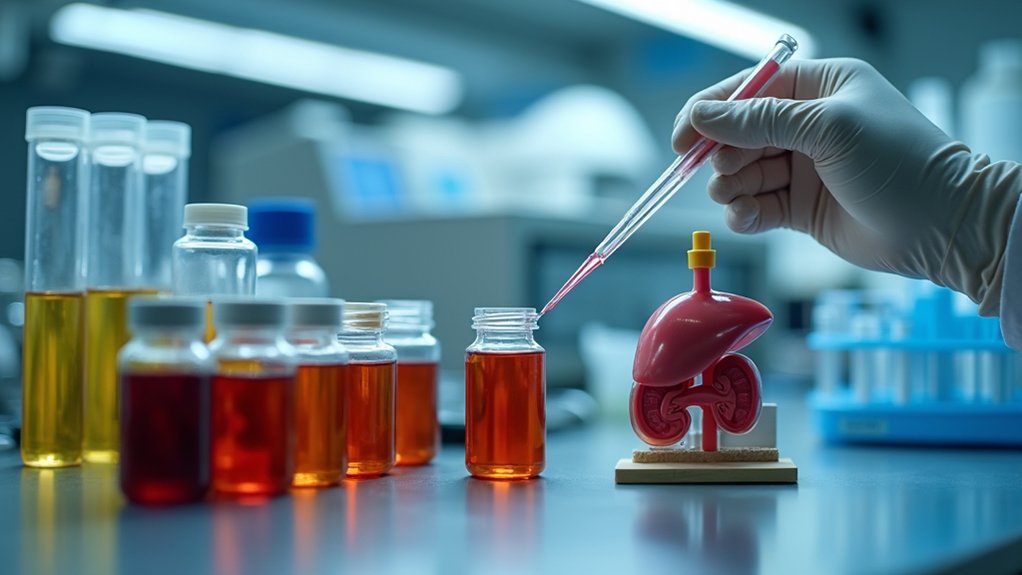
Once cocaine enters your bloodstream, enzymes in your liver, blood, and other tissues start hydrolyzing it immediately. This produces two major metabolites: benzoylecgonine (BE) and ecgonine methyl ester (EME). A smaller fraction oxidizes to norcocaine. Your kidneys clear these metabolites, and 85% to 90% of a dose shows up in urine, with only 1% to 5% unchanged. Cocaine’s plasma half-life is 40 to 90 minutes, but BE lingers 3 to 4 days. Dose, enzyme activity, and alcohol use all shift that timeline, and here’s how.
Key Takeaways
- Enzymes in the liver, blood, and other tissues rapidly hydrolyze cocaine into benzoylecgonine and ecgonine methyl ester, with minor oxidation to norcocaine.
- Kidneys eliminate most cocaine as metabolites in urine, recovering about 85 to 90% of a dose, with only 1 to 5% excreted unchanged.
- Cocaine’s plasma half-life is roughly 40 to 90 minutes, but its slower-clearing metabolites extend detectability well beyond the drug’s effects.
- Benzoylecgonine typically remains detectable in urine for about 3 to 4 days, depending on dose, frequency of use, and test cutoffs.
- Enzyme activity, route of use, repeated dosing, and alcohol co-use, which forms longer-lasting cocaethylene, all influence how quickly cocaine clears.
How does the body metabolize and eliminate cocaine
Your body metabolizes cocaine mainly through enzymes in the liver, blood, and other tissues that hydrolyze its ester groups, then eliminates it through the kidneys, mostly as metabolites. This breakdown begins almost immediately after cocaine enters your bloodstream, whether it’s smoked, injected, snorted, or swallowed. Hydrolysis produces two largely inactive metabolites, benzoylecgonine (BE) and ecgonine methyl ester (EME). A smaller fraction undergoes oxidation to norcocaine.
The cocaine half life is short, commonly 40–90 minutes in plasma, but BE and EME clear more slowly, so they’re detectable longer.
Only 1–5% of a dose exits unchanged. Studies recover roughly 85–90% of an administered dose in urine, which is why drug tests usually target BE rather than the parent drug. Detection windows vary.
How does cocaine move through the body over time
Cocaine moves through your body in four stages: absorption, distribution, metabolism, and excretion. Your route of use sets the pace, and each stage leaves measurable traces.
| Stage | Key Process | Timing |
|---|---|---|
| Absorption | Smoking reaches brain; snorting peaks in plasma | 6–8 seconds; 30–60 minutes |
| Distribution | Spreads into tissues; ~90% protein-bound | Minutes |
| Metabolism | Hydrolysis forms BE and EME | Half-life: 40–90 minutes |
| Excretion | Kidneys clear metabolites into urine | BE detectable 3–4 days |
The half life of cocaine varies with your route and enzyme activity. One study reported 1.5 hours in plasma and 4.1 hours in urine. Only about 1–5% exits unchanged. Because BE and EME clear more slowly, they outlast the parent drug in your urine. A positive test shows prior exposure, not current impairment, dose, or exact timing.
What is the half-life of cocaine
Cocaine has a plasma half-life of roughly 40 to 90 minutes, so your body clears half of a measured concentration within that window. The exact value shifts with how you take the drug and with individual differences in enzyme activity.
Specimen type matters too. One study reported mean elimination half-lives of 1.5 hours in plasma, 1.2 hours in saliva, and 4.1 hours in urine. Its main metabolites, benzoylecgonine and ecgonine methyl ester, clear more slowly, so they stay detectable well after the parent drug drops below measurable levels.
Keep in mind what half-life actually measures: the time a concentration takes to fall by half. It doesn’t tell you exactly when you’ll test negative, because dose, repeated use, and assay cutoffs also shape your test results.
Which organs metabolize cocaine
Your liver metabolizes most cocaine, but enzymes in your blood and other tissues also hydrolyze it, so metabolism begins as soon as the drug enters circulation. Your liver hydrolyzes cocaine’s ester groups, converting most of each dose into two largely inactive metabolites: benzoylecgonine (BE) and ecgonine methyl ester (EME). Your body further breaks BE and EME down to ecgonine. A smaller fraction undergoes oxidative metabolism, producing norcocaine. If you’ve consumed alcohol, your body can also form cocaethylene, an active metabolite with a longer half-life than cocaine. Your kidneys don’t primarily metabolize cocaine. They excrete it, clearing about 85–90% of a dose in urine, mostly as BE and EME, with only 1–5% unchanged.
What metabolites does the body produce
Your body produces two principal cocaine metabolites: benzoylecgonine (BE) and ecgonine methyl ester (EME). Hydrolysis of cocaine’s two ester groups forms each through a distinct pathway, and both can break down further into ecgonine. Compared with cocaine, BE and EME are largely inactive.
A smaller fraction of cocaine undergoes oxidative metabolism, which yields norcocaine. If you combine cocaine with alcohol, your body also forms cocaethylene, a pharmacologically active metabolite with a longer half-life than cocaine.
Drug tests commonly measure BE because it persists longer than cocaine in your biological samples. Still, metabolite proportions and persistence vary with dose, route, individual physiology, and your use patterns. Detecting a metabolite shows you’ve been exposed, but it doesn’t establish that you’re currently impaired.
What slows down how fast cocaine clears
Lower enzyme activity, higher doses, repeated use, and combining cocaine with alcohol can all slow how fast cocaine clears, and the route you use can shift its timing. Reported plasma half-life estimates commonly range from 40 to 90 minutes, but these factors can shift where you fall in that range or beyond it. Since hydrolysis drives most breakdown in your liver, blood, and other tissues, lower enzyme activity can slow clearance. The route you use changes absorption and exposure. Intranasal use, for example, peaks later, around 30–60 minutes. Higher doses and repeated use can extend how long cocaine and its metabolites stay measurable. If you combine cocaine with alcohol, your body forms cocaethylene, an active compound with a longer half-life than cocaine. Finally, benzoylecgonine and ecgonine methyl ester eliminate more slowly than the parent drug, so they persist after cocaine has cleared.
Why does metabolism differ from person to person
Metabolism differs from person to person because your enzymes, physiology, and use patterns all shape how quickly your body breaks cocaine down. Most cocaine undergoes hydrolysis in your liver, blood, and other tissues, producing benzoylecgonine (BE) and ecgonine methyl ester (EME). If your enzyme activity differs from someone else’s, your half-life can differ too. Reported plasma estimates range from 40 to 90 minutes.
Route and dose also matter. Smoking or injecting delivers cocaine to your brain within seconds, while intranasal use peaks in plasma after 30–60 minutes. Repeated use can extend how long you test positive. If you’ve consumed alcohol, your liver forms cocaethylene, an active metabolite that lasts longer than cocaine. Because these variables interact, no single timeline applies.
Let Your Recovery Start Before the Cocaine Clears
Understanding how cocaine moves through your body is one thing; stepping away from it is another. Changes Treatment Center offers outpatient treatment programs including PHP and IOP that help you quit safely and stay stopped. Our team can talk you through the process with care and zero judgment. Call Us Now to take the first step.
Frequently Asked Questions
How Long Can Cocaine Be Detected in a Urine Drug Test?
Standard urine assays typically detect cocaine use for about 3–4 days after your last dose, because they target benzoylecgonine (BE), a metabolite that outlasts cocaine itself. Your actual window can vary with dose, frequency of use, metabolism, and the assay’s cutoff; repeated use can extend it. Don’t treat this window as precise: a positive result shows you’ve had prior exposure, but it can’t establish your dose, timing, or current impairment.
Can a Saliva or Blood Test Detect Cocaine Use?
Yes, saliva and blood tests can detect cocaine use, but they typically capture a shorter window than urine testing. Cocaine clears from your bloodstream quickly; one study reported mean elimination half-lives of 1.5 hours in plasma and 1.2 hours in saliva. Your results also depend on dose, repeated use, metabolism, and assay cutoff. A positive result shows you’ve had prior exposure, but it doesn’t establish current impairment or exact timing.
Does a Positive Drug Test Mean Someone Is Currently Impaired?
No, a positive test doesn’t prove you’re currently impaired. Most urine assays target benzoylecgonine (BE), an inactive metabolite that your body eliminates more slowly than cocaine, so it can remain detectable for roughly 3–4 days after your last use. Cocaine’s plasma half-life, by contrast, is only about 40–90 minutes. A positive result shows prior exposure, but it can’t establish your dose, the exact timing of use, or your present impairment.
What Happens When Cocaine and Alcohol Are Used Together?
When you combine cocaine and alcohol, your body can form cocaethylene, a distinct metabolite that doesn’t behave like the largely inactive products benzoylecgonine (BE) and ecgonine methyl ester (EME). Cocaethylene stays pharmacologically active, and its half-life exceeds cocaine’s 40–90 minute plasma estimate, so it can persist longer than the parent drug. Its formation and persistence vary with your dose, route, physiology, and use pattern, and detecting it won’t confirm current impairment.
Can Drinking Water or Exercise Help Flush Cocaine Out Faster?
No, neither reliably speeds cocaine elimination. Your liver, blood, and tissue enzymes hydrolyze cocaine into benzoylecgonine and ecgonine methyl ester, and you can’t meaningfully accelerate that enzymatic rate with fluids or exercise. Your kidneys excrete these metabolites at their own pace; extra water mainly dilutes urine rather than clearing metabolites faster. Overhydration can also cause dangerous hyponatremia. Detection still depends on dose, use frequency, metabolism, assay cutoff, and specimen type.