



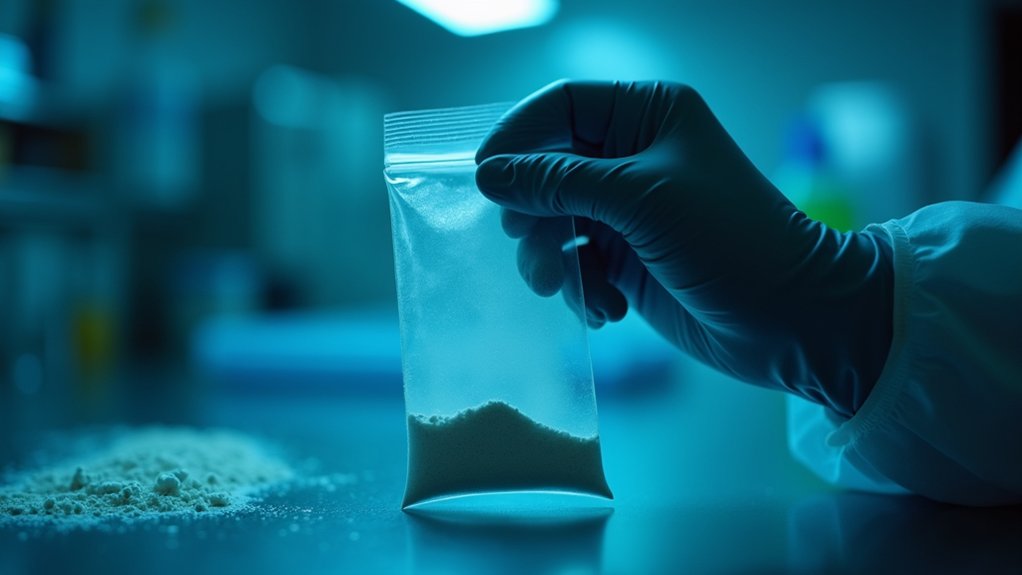

Fentanyl can hide in cocaine, meth, and counterfeit pills without changing how they look, smell, or taste. You can’t detect it by sight or taste, so you may not know it’s there. Illicit fentanyl mixes unevenly, creating potent hot spots, so one dose can carry a fatal amount. If you don’t have opioid tolerance, even a tiny amount can stop your breathing. Understanding how contamination happens, and how to protect yourself, can save your life.
Key Takeaways
- Fentanyl leaves no reliable visual, smell, or taste clues, so contaminated cocaine looks and tastes identical to safe product.
- Illicit fentanyl mixes unevenly into powders and pills, creating unpredictable hot spots where a single dose can be fatal.
- Fentanyl enters supplies through cross-contamination, intentional mixing, production adulteration, or counterfeit pills pressed to mimic oxycodone or alprazolam.
- Without opioid tolerance, tiny hidden amounts can rapidly slow breathing and cause fatal respiratory depression.
- Fentanyl test strips detect presence but not amount, and a negative result cannot guarantee safety due to hot spots.
Why Can Fentanyl-Laced Cocaine, Meth, and Pills Cause an Unexpected Opioid Overdose

Fentanyl-laced cocaine, meth, and pills cause an unexpected opioid overdose because fentanyl is extremely potent, and very small amounts can stop your breathing. Illicit fentanyl often gets mixed unevenly into powders and counterfeit pills, creating “hot spots” where one dose carries a fatal amount. You can’t rely on taste, smell, or appearance to reveal fentanyl contamination. Cocaine, meth, and pills can look identical to safe product. If you assume a stimulant isn’t an opioid, you may not recognize the danger until respiratory depression appears. That’s why an unexpected opioid overdose happens so often. Drug checking services have documented fentanyl in cocaine and methamphetamine samples, confirming the risk is real and widespread.
How Do Cocaine, Methamphetamine, and Counterfeit Pills Differ as Sources of Hidden Fentanyl Exposure
Cocaine, methamphetamine, and counterfeit pills each carry hidden fentanyl in different ways, so understanding those differences can help you gauge your risk. With stimulants, you’re not expecting an opioid, so contamination can catch you unprepared. Counterfeit pills mimic trusted medications, hiding lethal doses inside familiar-looking tablets.
| Source | How Fentanyl Enters | Key Risk |
|---|---|---|
| Cocaine | Cross-contamination or intentional mixing | Unexpected stimulant overdoses |
| Methamphetamine | Adulteration during production/packaging | No opioid tolerance to buffer effects |
| Counterfeit pills | Pressed to resemble oxycodone/alprazolam | One pill can be fatal |
Because fentanyl contamination distributes unevenly, one dose may be safe while the next isn’t. Stimulant overdoses now involve fentanyl frequently, and counterfeit pills vary widely in content. These differences help you take protective precautions seriously.
Why Is Hidden Fentanyl Especially Dangerous for People Without Opioid Tolerance
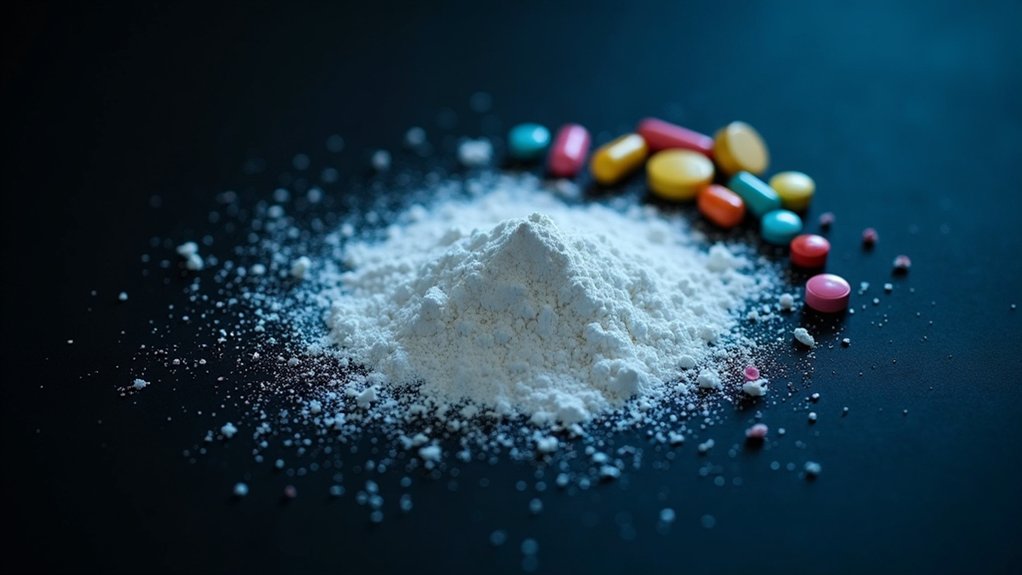
Hidden fentanyl is especially dangerous for people without opioid tolerance because even a tiny amount can trigger fatal respiratory depression. When you regularly use opioids, your body builds tolerance, meaning it needs higher doses to feel the same effects and can withstand amounts that would harm someone else. If you don’t have opioid tolerance, even a tiny amount of fentanyl can trigger fatal respiratory depression. That’s what makes fentanyl contamination in cocaine, meth, or counterfeit pills so deadly for you. When you reach for a stimulant or a pill you think is safe, you’re not expecting an opioid at all, so your body has no protective adaptation. This dramatically raises your overdose risk. Because fentanyl is unevenly mixed, one dose can contain a lethal hot spot. Without tolerance, your breathing can slow and stop quickly, sometimes before anyone recognizes something’s wrong.
Why Can You Not Reliably Tell if Cocaine Is Laced With Fentanyl by Sight, Smell, or Taste
You can’t reliably tell if cocaine is laced with fentanyl by sight, smell, or taste because contamination leaves no reliable clues. Illicit fentanyl mixes unevenly, creating potent “hot spots” that no amount of looking, smelling, or tasting can expose. These fentanyl detection challenges mean laced cocaine can appear, smell, and taste exactly like an uncontaminated product, leaving you with drug appearance indistinguishable from what you expect. That’s how overdose risk without signs develops, you feel confident a batch is safe when it isn’t.
Contamination leaves no clues, laced cocaine looks, smells, and tastes exactly like a safe batch.
- Fentanyl is potent in tiny amounts, so small hidden traces cause overdose.
- Uneven mixing produces unpredictable hot spots within a single supply.
- Color, texture, and odor stay unchanged after contamination.
- Taste offers no warning of fentanyl’s presence.
- Only fentanyl test strips reliably detect contamination.
Why Can Fentanyl Contamination Vary Within the Illicit Drug Supply

Fentanyl contamination varies within the illicit drug supply because that supply is unregulated, and no quality control governs how drugs are made, cut, or distributed. When someone mixes fentanyl into powders or pills, it’s rarely blended evenly. This uneven distribution creates “hot spots,” where one portion holds a trace amount and another holds a fatal dose. You can’t count on consistency, because the illicit drug supply passes through many hands, each capable of adding, diluting, or repackaging a product without measurement or oversight.
That means two pills from the same batch, or two lines from the same bag, may differ dangerously. Fentanyl contamination isn’t predictable, and you can’t assume a previous “safe” experience protects you. Each use carries its own, unknowable risk.
What Can Fentanyl Test Strips Tell You About a Drug Sample
Fentanyl test strips can tell you whether fentanyl is present in a drug sample, detecting it in many powders, pills, and residues. You dissolve a small portion in water, dip the strip, and read the result within minutes. Still, you should understand what these strips can and can’t tell you.
Fentanyl test strips reveal whether fentanyl is present in a sample, but knowing their limits matters just as much.
- They can confirm fentanyl’s presence in many cocaine, meth, and counterfeit pill samples.
- They can’t measure how much fentanyl a sample contains.
- Detection limits vary, so very low or uneven concentrations may go undetected.
- A negative result doesn’t guarantee safety, given hot spots.
- One tested portion may not represent the entire supply.
Test carefully, and pair results with naloxone.
Why Should Naloxone Be Available When Hidden Opioid Exposure Is Possible
Naloxone belongs within reach whenever you or someone nearby might encounter an unregulated drug, because fentanyl can hide in cocaine, meth, and counterfeit pills without any warning signs. Naloxone can reverse opioid overdose, including fentanyl overdose, if you give it quickly. That speed matters, because respiratory depression may appear only after an overdose has already become severe. Even when you don’t expect an opioid, hidden exposure remains possible, so keeping naloxone available protects you against a risk you can’t always see. Drug checking services have confirmed fentanyl in methamphetamine and cocaine samples, reinforcing why overdose reversal tools shouldn’t be limited to known opioid use. Pair naloxone with avoiding use alone, and call emergency services when you notice slow breathing, blue lips, or unresponsiveness.
Stop Hidden Fentanyl Risk Before It Leads to an Overdose
Changes Treatment Center in Costa Mesa provides treatment for cocaine, methamphetamine, opioid, and other substance use disorders through Partial Hospitalization (PHP), Intensive Outpatient (IOP), therapy, psychiatry and medication management, and aftercare and support groups. If fentanyl exposure is a concern because of cocaine, meth, counterfeit pills, or other drugs obtained outside a pharmacy, treatment can address the ongoing substance use along with the triggers, patterns, and mental health symptoms connected to it. Call (949) 807-2008 to speak with the admissions team about available treatment options.
Frequently Asked Questions
How Many Doses of Naloxone Might a Fentanyl Overdose Require?
You might need more than one dose of naloxone to reverse a fentanyl overdose. Because fentanyl’s so potent, a single dose sometimes isn’t enough, and you may have to give additional doses every few minutes until breathing improves or help arrives. Don’t wait, call 911 right away, keep administering naloxone if the person stays unresponsive, and watch closely. You’re doing the right thing by acting quickly and staying present.
Are Fentanyl Test Strips Legal to Buy and Carry?
Fentanyl test strips are legal in most U.S. states, though laws vary by location. Many states have removed them from “drug paraphernalia” restrictions, making them legal to buy and carry. However, some areas still classify them as paraphernalia, so you’ll want to check your local regulations. These strips can help you detect fentanyl in many drug samples, offering a practical harm-reduction tool. When available, they’re worth having with you.
What Should I Do if Someone Stops Breathing?
Call 911 immediately. Then give naloxone if you have it, it can reverse an opioid overdose, including fentanyl, when given quickly. If breathing’s stopped or is very slow and lips look blue, start rescue breathing while you wait for help. Stay with the person and give a second naloxone dose after a few minutes if they’re still unresponsive. Don’t leave them alone, and keep monitoring their breathing until responders arrive.
Can Fentanyl Be Absorbed Through Skin From Casual Contact?
No, casual skin contact won’t cause fentanyl overdose. Brief touching of powder or a pill isn’t enough for dangerous absorption, fentanyl doesn’t pass through intact skin quickly or in meaningful amounts. If you contact it, just wash your hands with soap and water. Avoid touching your eyes, nose, or mouth beforehand. You can help someone safely without fear of poisoning yourself, so don’t let that stop you from responding.
Where Can I Access Free Naloxone or Drug Checking Services?
You can access free naloxone through many local health departments, community harm reduction programs, and pharmacies offering standing-order distribution. Ask about state naloxone access programs, which often mail it directly to you. For drug checking, community harm reduction organizations frequently provide free fentanyl test strips and, in some areas, on-site drug checking services. Contact your local health department or search harm reduction directories to find nearby options. You’re not alone in this.