






You can lower your overdose risk with a few practical steps. Test your drugs with fentanyl test strips, but know they only confirm presence, not potency. Keep naloxone close, since it reverses opioid overdoses and it’s available in all 50 states. Use smaller amounts, go slowly, and don’t mix opioids with alcohol or sedatives. Never use alone, or set up a check-in plan. Each strategy adds a layer of protection worth understanding further.
Key Takeaways
- Use fentanyl test strips to detect fentanyl in drugs, but remember they show presence, not amount or potency.
- Keep naloxone on hand and learn overdose recognition to enable rapid, life-saving overdose reversal.
- Use smaller doses, go slowly, and avoid mixing opioids with alcohol or sedatives.
- Never use alone; arrange a check-in plan or call a never-use-alone hotline for support.
- Pair harm reduction with evidence-based treatment like buprenorphine or methadone when ready.
What Fentanyl Harm Reduction Steps Can Lower Overdose Risk

Fentanyl test strips let you check pills, powders, and other drugs for contamination before use, giving you information to act on. No single tool protects you, so combining strategies works best. Because evidence shows strips alone don’t reduce overdose deaths, pair them with naloxone, an opioid antagonist that reverses fentanyl overdose. Keep naloxone on hand, learn to recognize slowed breathing and unresponsiveness, and make sure someone nearby can respond. Safer use patterns matter too: use smaller amounts, go slowly between doses, avoid mixing opioids with alcohol or sedatives, and don’t use alone. Shifting away from injecting toward snorting or smoking can also lower your risk.
How Can You Know if Something Is Laced When Fentanyl Cannot Be Reliably Identified by Sight, Smell, or Taste
The only reliable way to know if something is laced with fentanyl is to use a fentanyl test strip, because you can’t tell by looking at it, smelling it, or tasting it. Fentanyl contamination shows up in pills, powders, and other substances without changing how they appear, and appearance, smell, or taste offer no dependable warning. That’s why drug checking matters. Fentanyl test strips are a low-cost tool that can detect fentanyl’s presence, giving you information to take additional steps before you use. Keep in mind that fentanyl test strips work best as part of overdose prevention, not as a stand-alone safeguard. Research shows limited evidence that they reduce overdose deaths on their own, so pair them with smaller doses, slower use, naloxone, and not using alone for stronger protection.
What Can Fentanyl Test Strips Tell You and What Can They Not Confirm
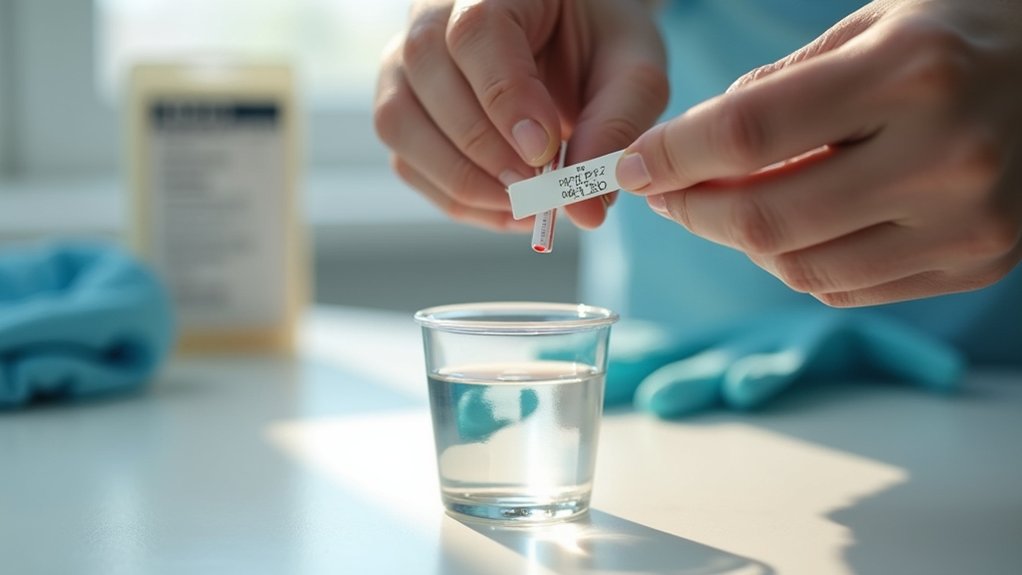
Fentanyl test strips tell you one thing: whether fentanyl is present in the sample you check. That single result supports overdose risk reduction, but it can’t measure how much fentanyl is there, where it’s concentrated, or whether analogs are present. These drug checking limitations help you use fentanyl test strips wisely.
| What FTS Can Tell You | What FTS Can’t Confirm | Why It Matters |
|---|---|---|
| Fentanyl is present | The amount present | Potency still unknown |
| Fentanyl is absent | Even distribution | Contamination can be uneven |
| A positive result | Presence of all analogs | Some analogs may not react |
| Basic contamination signal | That the drug is safe | No result means “safe” |
Pair strips with naloxone and slower dosing.
Why Does Keeping Naloxone Available Lower the Risk of a Fatal Opioid Overdose
Keeping naloxone available lowers the risk of a fatal opioid overdose because it reverses an overdose in the minutes that matter most. Naloxone is an opioid antagonist that reverses an opioid overdose, including overdoses involving fentanyl, by restoring breathing when it’s slowed or stopped. Keeping it on hand means you can respond in the minutes that matter most, rather than waiting for help that may arrive too late. That’s why naloxone anchors any overdose prevention plan. Carrying it increases the chance of rapid response, and training on overdose recognition and administration improves your readiness to act. It’s available in all 50 states, so getting it is realistic. Think of naloxone as one essential layer in your harm reduction approach, working alongside smaller doses, avoiding use alone, and not mixing sedatives to protect you.
Why Does Using Drugs Alone Increase Overdose Risk

Using alone raises overdose risk because there’s no one to intervene when fentanyl slows or stops your breathing. During an overdose, you can’t administer naloxone to yourself or call for help once you’ve lost consciousness. Fentanyl can suppress breathing quickly, sometimes within minutes, leaving no time for self-rescue. When someone else is present, they can recognize overdose signs, give naloxone, and contact emergency services, actions that save lives.
If you can’t avoid using alone, build harm reduction into your routine. Set up a check-in plan with someone you trust, or call a never-use-alone hotline that stays on the line while you use. These layered strategies don’t eliminate overdose risk entirely, but they give someone the chance to respond when you can’t.
How Can Mixing Substances Make Fentanyl Risk More Unpredictable
Mixing substances makes fentanyl risk more unpredictable because what you combine with fentanyl shapes how dangerous a single dose becomes. When you mix opioids with alcohol, benzodiazepines, or other sedatives, their depressant effects stack, slowing your breathing more than any single substance would. This kind of polysubstance use is a major driver of overdose unpredictability, because you can’t reliably predict how the combination will affect you from one time to the next. Fentanyl adulteration adds another layer of uncertainty. Contamination can appear in pills, powders, and other drugs, so you may be mixing sedatives without knowing fentanyl’s already present. To lower your risk, avoid combining depressants when you can, use smaller amounts, and keep naloxone within reach in case breathing slows.
When Can Harm Reduction Be Paired With Evidence-Based Addiction Treatment
Harm reduction can be paired with evidence-based addiction treatment at any stage, whether you’re actively using, cutting back, or ready to stop, because both work toward the same goal of keeping you alive and reducing harm. There’s no prerequisite of abstinence before you access support. You can continue using fentanyl test strips and maintaining naloxone access, and you can also connect with evidence-based addiction treatment, including medications like buprenorphine or methadone that reduce cravings and overdose risk. These approaches aren’t competing choices; they reinforce each other. Staying alive through harm reduction gives you the opportunity to enter treatment when you’re ready, and treatment doesn’t require you to abandon protective tools overnight. Talk with a provider or harm reduction program about layering these strategies to fit your situation.
Reduce Fentanyl Risk Today and Address the Use Behind It
Changes Treatment Center in Costa Mesa provides treatment for fentanyl, opioid, and other substance use disorders through Partial Hospitalization (PHP), Intensive Outpatient (IOP), individual and group therapy, psychiatric care and medication management, and support for co-occurring mental health conditions. If fentanyl exposure, repeated opioid use, or overdose risk has become an ongoing concern, treatment can address the substance use along with the triggers, behaviors, and mental health symptoms connected to it. Call (949) 807-2008 to speak with the admissions team about available treatment options.
Frequently Asked Questions
How Long Does Naloxone Take to Work After Administration?
Naloxone usually starts working within 2 to 3 minutes after you give it. If breathing doesn’t improve, you can give another dose every 2 to 3 minutes until the person responds or help arrives. Because fentanyl’s so potent, you might need multiple doses. Always call 911 right away, naloxone’s effects can wear off before the opioid does, so keep monitoring breathing and be ready to act again. You’re doing the right thing.
Can You Build Tolerance to Fentanyl’s Overdose Effects?
You can build some tolerance to fentanyl’s effects, but it doesn’t protect you fully from overdose. Tolerance drops quickly after even a few days without use, so returning to your previous amount can be deadly. Because illicit fentanyl’s potency varies unpredictably, you can’t rely on tolerance to keep you safe. Use smaller amounts, go slowly, keep naloxone nearby, and don’t use alone whenever you can.
Where Can I Get Free Naloxone and Fentanyl Test Strips?
You can get free naloxone and fentanyl test strips through local harm reduction programs, syringe service programs, and many health departments. Check NEXT Distro online, which mails supplies to many areas. Call your state’s overdose prevention hotline or 211 for nearby options. Some pharmacies also offer free or low-cost naloxone. Since naloxone’s available in all 50 states, you’ve got solid access, reach out, and you’ll find support without judgment.
Should I Call 911 Even After Giving Naloxone?
Yes, you should always call 911 after giving naloxone. Naloxone’s effects can wear off in 30 to 90 minutes, but fentanyl can last longer in the body, so overdose symptoms may return. Emergency responders can provide additional doses and monitor breathing. Stay with the person, give rescue breaths if needed, and be ready to administer another dose. You’re doing the right thing by seeking help, it saves lives.
Are There Good Samaritan Laws Protecting People Who Report Overdoses?
Yes, most states have Good Samaritan laws that offer some legal protection when you call 911 to report an overdose. These laws typically shield you and the person overdosing from certain drug-possession charges, encouraging you to seek help without fear. Protections vary by state, so they don’t cover everything. Still, calling for emergency help saves lives, don’t let worry stop you. Give naloxone, call 911, and stay until help arrives.