





7-hydroxymitragynine, or 7-OH, is a potent terpenoid indole alkaloid linked to kratom. You’ll find it as a minor natural leaf constituent, an oxidation product formed during drying or storage, and a metabolite of mitragynine. It partially activates µ-opioid receptors with nanomolar potency, while interacting differently with δ- and κ-opioid receptors. Fresh leaves usually contain trace amounts. The “7-hydroxy” name marks its chemical modification, not its dose, and there’s more to understand about its risks.
Key Takeaways
- 7-Hydroxymitragynine is a terpenoid indole alkaloid associated with kratom, or *Mitragyna speciosa*.
- It occurs naturally in kratom leaves only in trace amounts and is also formed from mitragynine metabolism or oxidation.
- Fresh leaves usually contain little or none, while drying, storage, and oxidation can increase measurable levels.
- The “7-hydroxy” name means mitragynine has a hydroxy group at position 7, not a dose indicator.
- It is a potent partial µ-opioid receptor agonist, with higher receptor potency than mitragynine in laboratory studies.
What is 7-hydroxymitragynine
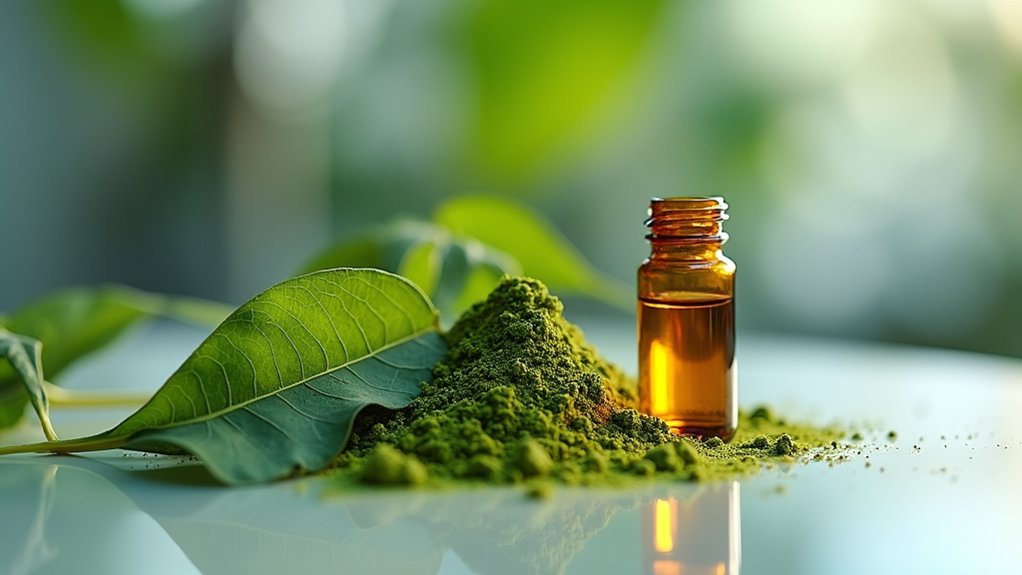
7-Hydroxymitragynine, often shortened to 7-OH or 7-OH-mitragynine, is a terpenoid indole alkaloid associated with *Mitragyna speciosa* (kratom). It is both a minor natural kratom constituent and a metabolite of mitragynine, the plant’s dominant alkaloid. In fresh leaves, you’d usually find absent or trace 7-hydroxymitragynine. Drying, storage, and oxidative chemistry can increase measurable amounts. Natural leaf material typically contains very low concentrations, often below 0.05% of dry weight and less than 2% of total alkaloids. You’ll also see 7-hydroxymitragynine discussed separately from kratom because enriched products can contain levels that don’t reflect the plant’s native chemistry. Chemically, its hydroxyl substitution changes receptor-relevant properties and makes it pharmacologically important despite scarce abundance in raw leaf.
How does 7-hydroxymitragynine act on the brain’s opioid receptors
7-hydroxymitragynine acts on the brain’s opioid receptors primarily as a biased, partial µ-opioid receptor agonist, activating analgesia-linked signaling without reaching full agonist efficacy. Its low abundance in natural kratom doesn’t match its pharmacologic impact because 7-hydroxymitragynine interacts strongly with opioid receptors in the brain and peripheral nervous system. In vitro human µ-receptor data show nanomolar potency, with reported EC50 about 34.5 nM and Emax about 47%, exceeding mitragynine. Researchers are currently assessing the elimination timeline for 7oh to better understand its pharmacokinetics. This assessment may provide insights into the duration of its effects and potential implications for therapeutic use.
| Target | Action | Functional result |
|---|---|---|
| µ-opioid | Partial agonism | Analgesia, euphoria |
| δ-opioid | Antagonism | Modulates opioid tone |
| κ-opioid | Antagonism | Limits dysphoric signaling |
| Brain circuits | Receptor activation | Reward and pain control |
You’re seeing opioid-class pharmacology, not a separate kratom-specific pathway. Higher exposure can increase dependence, withdrawal, sedation, and respiratory-risk concerns.
What does the name 7-hydroxymitragynine actually tell you
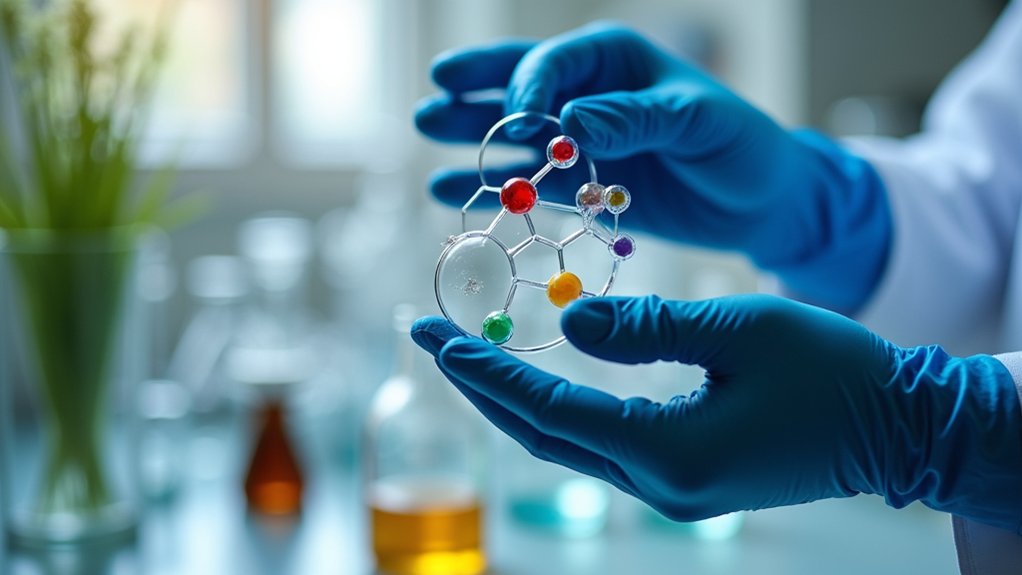
The name 7-hydroxymitragynine tells you that mitragynine has a hydroxy group at the 7 position.
- You can read “7” as a structural address, not a dose or strength marker.
- You can read “hydroxy” as added polarity, since, OH can change hydrogen bonding and receptor interactions.
- You can read “mitragynine” as the core framework that 7-hydroxymitragynine modifies.
- You shouldn’t infer natural abundance from the name; nomenclature describes structure, while measurements show levels in leaf, extracts, or metabolism.
Which other names and abbreviations does it appear under
7-OH-mitragynine appears under names and abbreviations such as 7-OH, 7-HMG, a kratom alkaloid, a minor leaf constituent, an oxidation product, or a mitragynine metabolite. Those terms classify source or formation pathway, while the abbreviations identify structure. In analytical reports, you may encounter “7-OH” beside concentration data because labs shorten names in chromatographic tables. In policy documents, “7-HMG” helps distinguish it from mitragynine and from broader kratom alkaloid mixtures. Always map synonyms before comparing potency, exposure, or safety claims. The risks associated with 7-oh tablets can vary significantly depending on the dosage and individual health factors. Users should be particularly cautious about potential side effects and interactions with other substances.
When was it first identified and what has research shown since
7-hydroxymitragynine was first identified in late-1990s isolation work, when chemists identified 7-OH-mitragynine as a minor oxidized alkaloid in Mitragyna speciosa. Research since then has shown it is scarce in fresh leaves, can increase with drying and oxidation, acts as a partial µ-opioid receptor agonist with δ- and κ-opioid antagonism, and can also be generated from mitragynine in the body via cytochrome enzymes.
- Researchers first treated it as scarce chemistry: fresh leaves showed absent or trace levels, while drying and oxidation increased formation.
- You then saw pharmacologists test receptor activity, finding partial µ-opioid receptor agonism with δ- and κ-opioid antagonism.
- Comparative assays showed nanomolar potency, with one study reporting EC50 34.5 nM versus mitragynine’s 339 nM at human µ receptors.
- Later metabolism studies showed your body can generate 7-hydroxymitragynine from mitragynine via cytochrome enzymes, making it a key active metabolite in analgesic mechanisms.
Why do scientists disagree about how dangerous it is
Scientists disagree because risk estimates compare unlike exposures, assays, and endpoints. Natural kratom leaf contains trace 7-hydroxymitragynine, while enriched products can deliver much higher doses. That changes receptor occupancy, pharmacokinetics, and toxicity margins.
Disagreement also comes from the fact that opioid potency depends on the model. In vitro studies show nanomolar µ-opioid receptor activity and higher potency than mitragynine, but cell assays don’t directly predict human overdose risk. Animal analgesia studies, metabolism data, case reports, and poison-center records each measure different outcomes.
Scientists also weigh partial agonism differently. Some emphasize lower intrinsic efficacy than full opioids; others focus on dependence, withdrawal, respiratory depression signals, and product adulteration. Without standardized products, dose data, and controlled human safety studies, you get plausible but conflicting hazard estimates across research groups.
What should you ask a doctor if you have been taking it
Ask a doctor how your dose, product type, frequency, and other medications affect your risk for opioid-like toxicity if you’ve been taking 7-hydroxymitragynine. The potential 7-oh adverse effects can vary based on individual health conditions and the presence of other substances. It is crucial to monitor and report any unusual symptoms to your healthcare provider.
- Ask whether your product may contain enriched 7-OH (7-hydroxymitragynine), because concentrated exposure can exceed trace kratom leaf levels and increase µ-opioid receptor activation.
- Ask about warning signs of respiratory depression, sedation, dependence, and withdrawal, especially if you combine it with alcohol, benzodiazepines, opioids, or sleep drugs.
- Ask whether liver enzymes, gastrointestinal metabolism, or drug interactions could alter mitragynine conversion into 7-OH and raise active exposure.
- Ask how to taper safely instead of stopping abruptly, and whether you need monitoring, naloxone access, pain-care alternatives, or addiction-medicine support today.
When 7-OH Use Becomes Hard to Control
Because 7-hydroxymitragynine acts on opioid receptors, repeated use can lead to tolerance, cravings, withdrawal symptoms, and increasingly frequent dosing. Changes Treatment Center helps people address these patterns through structured outpatient care, including PHP, IOP, therapy, and psychiatric support. Treatment can help you manage withdrawal-related discomfort, identify what is driving continued use, and build a plan that supports recovery while you remain connected to daily responsibilities. If you are taking 7-OH more often, increasing the amount, or using it to avoid feeling sick, call (949) 807-2008 to speak with Changes Treatment Center about your options.
Frequently Asked Questions
Is 7-Hydroxymitragynine Naturally Present in Fresh Kratom Leaves?
No. You generally won’t find meaningful 7-hydroxymitragynine in fresh kratom leaves; it’s absent or present only at trace levels. Fresh leaf chemistry is dominated by mitragynine and other alkaloids. You see 7-OH increase when mitragynine oxidizes during drying, storage, processing, or metabolism through cytochrome enzymes in the liver and intestine. Natural dried leaf still contains very little, often under 0.05% by dry weight, unlike enriched products.
How Much 7-Hydroxymitragynine Is Found in Typical Kratom Products?
You’ll usually find very little 7-hydroxymitragynine in typical natural kratom products: often below 0.05% of dry leaf weight and under 2% of total alkaloids. Fresh leaves contain none or trace amounts, but drying and oxidation can generate small quantities from mitragynine. You shouldn’t assume all products match leaf chemistry, though. Concentrated, enhanced, or semi-synthetic products may contain much higher 7-OH levels, increasing opioid-like potency, dependence, withdrawal, and overdose risks.
Can 7-Hydroxymitragynine Form During Kratom Drying or Storage?
Yes. You can get 7-hydroxymitragynine formation when mitragynine oxidizes during drying, aging, or storage, especially with heat, oxygen, light, and prolonged exposure. Fresh kratom leaves generally contain none or only trace amounts, but post-harvest oxidation can increase measurable 7-OH. You shouldn’t assume storage creates high levels, though; natural leaf still usually contains very little unless a product’s been enhanced, processed, or adulterated with added 7-OH concentrates.
Is 7-Hydroxymitragynine Legal in My State or Country?
You can’t assume 7-hydroxymitragynine is legal where you live; legality depends on your jurisdiction and product type. You’ll need to check national, state, provincial, and local controlled-substance, food, supplement, and consumer-safety rules. Regulators often distinguish trace natural kratom alkaloids from concentrated or added 7-OH products. The FDA says added 7-OH isn’t approved and isn’t lawful in foods or supplements without meeting safety requirements. Laws can change quickly too.
How Is 7-Hydroxymitragynine Different From Mitragynine?
You distinguish 7-hydroxymitragynine from mitragynine by potency, abundance, and origin. Mitragynine is kratom’s main alkaloid; 7-OH occurs only in trace amounts and also forms when enzymes oxidize mitragynine. At µ-opioid receptors, 7-OH acts more potently, with reported nanomolar activity, while mitragynine is weaker. You’ll see 7-OH linked more directly to analgesia, euphoria, dependence, withdrawal, and overdose risk, especially in enriched products. It isn’t approved medically anywhere.