




Being present in your recovery means you’re fully engaged with this moment, your breath, your body, your emotions, without judging yourself or escaping into past regrets and future worries. It’s a practice of noticing your thoughts without letting them control your actions. When you stay grounded in the now, you’re better equipped to recognize triggers, manage cravings, and make intentional choices. This skill strengthens over time, and understanding why it works can transform your entire recovery journey. what is identity recovery coverage is an essential aspect for individuals seeking to rebuild their sense of self. This coverage helps protect against the risks of identity theft and provides resources for restoration when personal information is compromised. By incorporating identity recovery into your recovery journey, you can enhance your resilience and build a stronger foundation for lasting change.
What Does Being Present Really Mean in Recovery?

When you’re in recovery, being present means directing your attention to what’s happening right now, in your body, your surroundings, your emotions, without judging any of it. It’s not about ignoring your past or avoiding future plans. It’s about preventing those thoughts from controlling your current actions and decisions.
You’re practicing a skill rooted in mindfulness, observing your thoughts without letting them dictate your behavior. This requires consistent effort and doesn’t come naturally to most people, especially in early recovery. Staying focused on the present reduces stress and anxiety, allowing you to make clearer, more intentional choices each day.
Within a community in addiction recovery, presence deepens. You listen more attentively, connect more genuinely, and engage fully with the people supporting your journey. That grounded awareness helps you recognize triggers early, respond intentionally, and stay anchored in the moment that matters most, this one. Exploring resources like self esteem in addiction recovery pdf can enhance your understanding of the emotional aspects of this journey. Such materials often provide valuable insights into rebuilding your self-worth, which is essential for long-term recovery. Engaging with these resources further strengthens the community connections that are pivotal to your success.
Why Your Mind Pulls You Away From the Present
Your mind doesn’t stay in the present on its own, it drifts backward into regret or forward into worry, often without you realizing it’s happening. In recovery, replaying past mistakes can convince you that you’re beyond repair, while anxiety about the future can make sobriety feel unsustainable before you’ve even given it a real chance. Both patterns pull you out of the only moment where recovery actually happens: this one. These distractions can even cause you to miss present experiences that are essential to building a meaningful, sober life.
Past Regrets Linger
Because addiction often consumes years of a person’s life, early recovery brings a flood of regret that can feel paralyzing. As brain fog lifts, you start seeing the relationships damaged, the opportunities missed, and the choices you wish you could undo. This rumination pulls you out of the present and into counterfactual thinking, replaying what might have been rather than engaging with what is.
| Regret Pattern | How It Pulls You Away | Present-Moment Alternative |
|---|---|---|
| Self-blame loops | Convinces you you’re unworthy of recovery | Separating behavior from identity |
| Emotional avoidance | Drives isolation from social support and sobriety networks | Processing feelings with trusted people |
| Accumulated “why” questions | Creates mental exhaustion | Redirecting focus toward actionable choices |
Regret fixates your mind on unchangeable events. However, when harnessed constructively, regret can serve as a tool to reassess choices and motivate meaningful progress in recovery. Recovery requires forward movement.
Future Anxiety Creeps In
Just as regret anchors you to what’s already happened, future anxiety locks your attention onto what hasn’t. You start over-planning, catastrophizing, or mentally rehearsing scenarios that may never unfold. It feels productive, but it’s actually avoidance, a way to sidestep the discomfort sitting right in front of you.
This pattern develops quietly. Your brain rewrites anxiety impulses through repetitive avoidant actions, creating cycles that mirror substance use itself. The more you escape into future concerns, the less equipped you become to handle present-moment stress. That disconnect increases your vulnerability to isolation and relapse.
Future anxiety also manifests physically, racing thoughts, muscle tension, disrupted sleep. These symptoms erode the stability recovery demands. Recognizing this pull toward tomorrow is the first step in choosing to stay here, where your recovery actually lives.
Mindfulness Practices That Keep You Present in Recovery

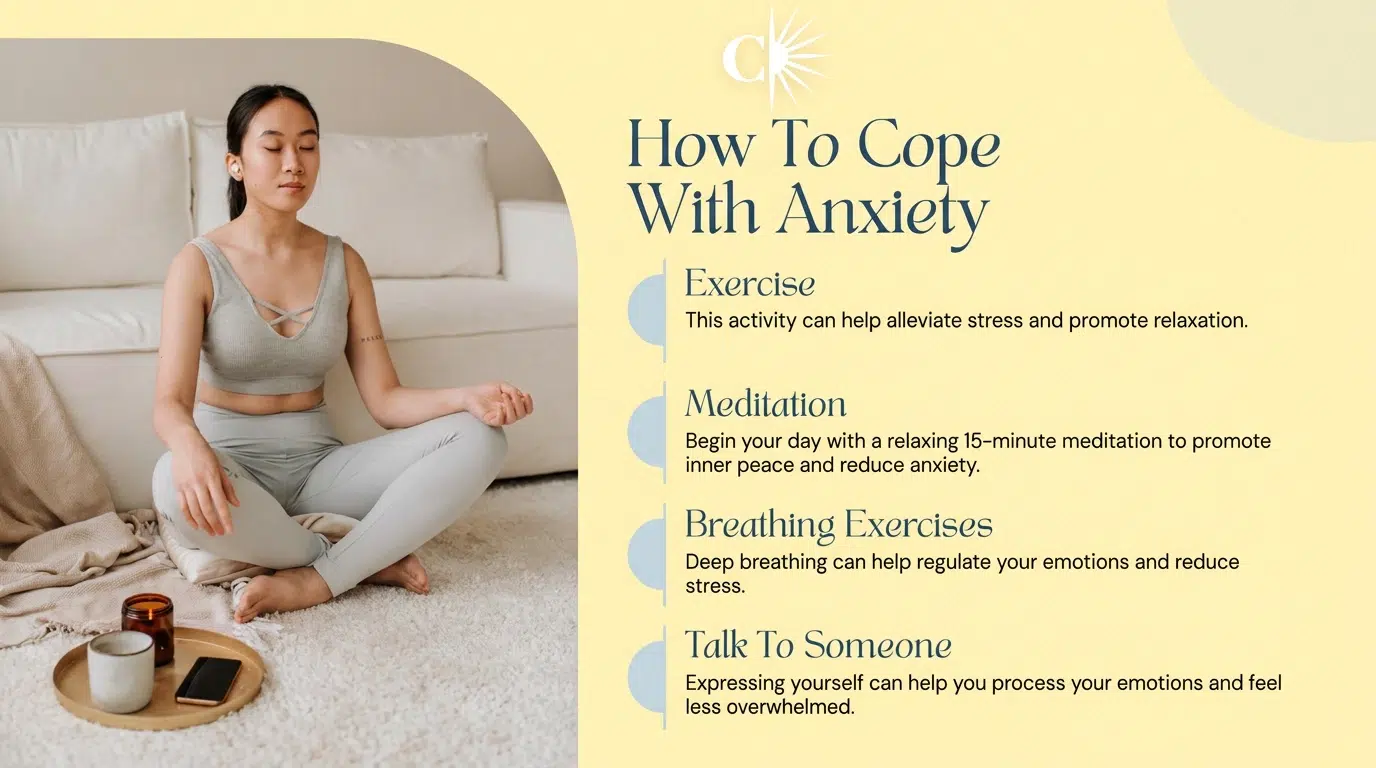
When a craving hits, your breath becomes one of the most accessible tools you have, inhaling slowly through your nose and extending your exhale can interrupt the urgency and bring you back to the present moment. Pairing this with a body scan, where you move your attention gradually from your feet to the top of your head, helps you notice where tension and stress are stored so you can release them rather than react to them. These two practices work together to ground you in your body, creating the pause you need to choose recovery over impulse.
Breathing Through Cravings
A craving can feel like a wave that’s about to pull you under, but your breath is the one tool you always carry that can hold you steady. Breathing through cravings works because it interrupts the automatic loop between trigger and reaction, giving you space to respond with intention. Understanding mindful breathing fundamentals builds present-moment awareness and strengthens emotional regulation over time. Mindfulness in recovery starts with this simple anchor.
| Technique | How It Helps |
|---|---|
| 4-7-8 Breathing | Controls anxiety through structured inhale, hold, and exhale counts |
| Extended Exhale | Amplifies calming response by lengthening exhale beyond inhale |
| Sensory Breath Focus | Deepens body connection by noticing where breath is felt most |
| Urge Surfing | Rides craving waves without reacting impulsively |
| Repeated Cycles | Builds cumulative calm through consistent daily practice |
Body Scan Relaxation
Once you’ve learned to anchor yourself with breath, you’re ready to expand that awareness into your whole body. Body scan relaxation involves systematically focusing on each body part, from your toes to the top of your head, noticing sensations like tightness, warmth, or tingling without judgment.
Research shows this practice reduces anxiety, decreases depression symptoms, and increases self-compassion. You’re not trying to fix anything. You’re simply observing what’s there, breathing into areas of tension, and letting resistance soften on each exhale.
This practice strengthens the connection and recovery outcomes you’re building daily. When you recognize your body’s stress signals early, you can respond with intention rather than reactivity. Even five minutes, practiced consistently, cultivates the present-moment awareness that makes cravings manageable and keeps you engaged in your recovery.
How Staying Present Helps You Avoid Relapse
Staying present doesn’t just improve your quality of life in recovery, it directly protects you from relapse. Regular mindfulness practices increase your awareness of early cravings, build space between impulse and action, and help you manage stress before it escalates.
| Challenge | Present-Moment Skill | Outcome |
|---|---|---|
| Cravings surface unexpectedly | Urge surfing without judgment | You observe without reacting |
| Stress triggers old patterns | Mindful breathing and pausing | You choose a healthier response |
| Negative thought spirals | Grounding in the now | You interrupt rumination early |
Research from Rutgers University shows a 42% reduction in opioid relapse rates among participants in mindfulness programs. You’re not eliminating discomfort, you’re learning to stay with it without reaching for substances.
How to Stay Grounded When Emotions Overwhelm You

Even when you’ve built strong mindfulness habits, there will be moments in recovery when emotions hit with an intensity that feels impossible to sit with. That’s normal. Grounding techniques give you practical tools to anchor yourself before reacting impulsively.
Grounding techniques anchor you in the present moment so you can choose your next step instead of reacting impulsively.
Try these three approaches when overwhelm strikes:
- Use sensory grounding. Name five things you can see, four you can touch, three you can hear, two you can smell, and one you can taste.
- Practice box breathing. Inhale, hold, exhale, and hold again, each for four counts.
- Reach for peer support recovery connections. Call someone who understands what you’re going through.
These aren’t distractions, they’re neurological resets. They interrupt the emotional spiral and return you to the present, where you can choose your next step intentionally.
Why Presence Gets Easier: and Stronger: Over Time
If staying present feels like a constant battle right now, that’s not a sign you’re failing, it’s a sign your brain is still learning. Neuroplasticity means every moment you practice presence, you’re building neural pathways that make it easier next time. Mindfulness practices in opioid treatment alone reduce relapse rates by 42%.
| Early Recovery | Sustained Recovery |
|---|---|
| Presence requires constant effort | Healthy habits begin to automate |
| Cravings feel overwhelming | Prefrontal cortex strengthens impulse control |
| Identity feels unstable | Identity shifts toward person in recovery |
The sober community benefits you experience, accountability, shared routine, connection, compound over time. Thriving quality accounts for 55% of variance in relapse risk prediction, proving consistency builds lasting resilience. how is sobriety a lifelong commitment is evident in the dedication individuals show towards fostering these essential connections. As they engage with supportive networks, they reinforce their own commitment while helping others navigate similar journeys. This reciprocal relationship not only strengthens personal resolve but also cultivates a community where sobriety becomes a shared goal and a collective lifestyle.
Call Today and Find Your Way Forward
Recovery is a daily commitment and having the right support around you makes it easier to stay focused and keep moving forward. At Changes Treatment Center, our Therapy program helps you stay grounded, engaged, and focused on what truly matters so you can build a recovery that lasts. Call (949) 807-2008 today and take the first step toward lasting change.
Frequently Asked Questions
Can Being Too Present in Recovery Bring up Trauma That Feels Unmanageable?
Yes, it absolutely can. When you tune into your body and emotions, unresolved trauma you’ve been avoiding may surface with real intensity. That’s not a sign you’re failing, it’s a sign your nervous system is waking up. You don’t have to face it alone. With professional support, grounding techniques, and a safe therapeutic environment, you can learn to process what arises without becoming overwhelmed or turning back to substances.
How Does Present-Moment Awareness Differ From Simply Ignoring Future Planning in Recovery?
Present-moment awareness doesn’t mean you stop planning, it means you stop letting uncertainty about the future control you right now. You’re still setting goals and making decisions, but you’re doing so from a grounded, intentional place rather than reacting from anxiety or fear. This shift helps you respond to cravings and triggers with clarity instead of running on autopilot, strengthening your ability to make choices that genuinely support your sobriety.
Is Mindfulness Effective for People Who Experienced Blackouts During Active Addiction?
Yes, mindfulness can be especially valuable if you’ve experienced blackouts. Blackouts represent a profound disconnection from present-moment awareness, and mindfulness directly rebuilds that capacity. Research shows it strengthens the brain circuits for cognitive control that chronic substance use disrupts. You’re fundamentally retraining your brain to stay connected to what’s happening right now. Through practices like body scans and breathing exercises, you’ll develop the self-awareness that addiction systematically eroded.
How Long Does It Typically Take to Notice Benefits From Mindfulness Practice?
You can notice calming effects and greater clarity within minutes of your first focused breathing session. With consistent daily practice, even just ten minutes, you’ll likely see measurable improvements in focus and reduced mind-wandering within four days. After two to four weeks, emotional regulation strengthens and stress becomes more manageable. The longer you practice, the deeper the benefits become, including lasting brain changes that support your recovery over months and years.
Can Practicing Presence Replace Other Forms of Addiction Treatment or Therapy?
Practicing presence can’t replace other forms of addiction treatment or therapy. It’s a powerful complementary tool, but recovery is a multifaceted process that addresses physical, mental, and spiritual dimensions, something mindfulness alone isn’t designed to do. You’ll get the most benefit when you integrate mindfulness into a broader treatment plan that includes structured support, therapy, and community. Think of presence as one essential skill within your larger recovery toolkit.