

Watch for unconsciousness, slow or stopped breathing, and gurgling or snoring sounds. Check their skin, pale, blue, gray, or ashen tones signal danger, along with pinpoint pupils and a limp body. Don’t wait for symptoms to worsen. Call 911 immediately and give your exact location. If you suspect opioids, give naloxone and be ready to repeat it. Roll them onto their side and stay close. Knowing the next steps could make all the difference.
Key Takeaways
- Watch for unconsciousness, slow or stopped breathing, and gurgling or snoring sounds signaling blocked airways.
- Check skin and lips for pale, blue, gray, or ashen coloring, plus pinpoint pupils.
- Call 911 immediately, provide your exact location, and don’t wait for symptoms to worsen.
- Administer naloxone if opioids are suspected, and be prepared to give repeat doses.
- Position the person on their side to prevent choking and stay with them until help arrives.
How Can You Spot an Overdose in a Loved One and Know What to Do Next
You can spot an overdose in a loved one by recognizing the signs quickly, which can mean the difference between life and death. The signs of overdose include unconsciousness or an inability to wake up, slow, shallow, irregular, or stopped breathing, and a limp body. Other indicators include choking, gurgling, or snoring-like sounds, pinpoint pupils, a pale face, and cold, clammy, or bluish skin. If you notice these indicators, act immediately. What to do if someone overdoses starts with calling 911 and giving your exact location, stating the person is unresponsive and not breathing. Don’t wait for symptoms to worsen. Treat any suspected overdose as a life-threatening emergency, even when the substance is unknown.
Which Changes in Breathing Responsiveness Skin Color or Movement Signal an Emergency
Changes in breathing, responsiveness, skin color, or movement signal an emergency when breathing becomes slow, shallow, irregular, or stopped, or when you hear gurgling, choking, or snoring sounds from someone who won’t wake. Treat any of these as a life-threatening emergency. A limp body, extreme drowsiness, or unconsciousness signals danger, and pale, cold, clammy, or bluish skin points to dangerously low oxygen.
| Warning Sign | What You See | Action |
|---|---|---|
| Breathing | Slow, stopped, gurgling | Call 911 |
| Responsiveness | Won’t wake, limp | Give naloxone |
| Skin Color | Pale, blue, gray, ashen | Monitor oxygen |
Watch for pinpoint pupils and discolored lips or nails too. Don’t wait for symptoms to worsen. Call 911 immediately, administer naloxone if available, and stay until help arrives.
How Can Depressant Stimulant and Mixed-Drug Overdose Patterns Differ
Depressant, stimulant, and mixed-drug overdoses differ in how they affect the body and how you should respond. Depressants like opioids slow the body down. You’ll often see unresponsiveness, slow or stopped breathing, pinpoint pupils, and cold, clammy, or bluish skin. Gurgling or snoring sounds may signal blocked breathing. Naloxone can reverse opioid effects, so use it if you suspect one.
Stimulants speed the body up instead. Watch for agitation, rapid heartbeat, high body temperature, sweating, and possible seizures or chest pain. Naloxone won’t reverse a pure stimulant overdose, but emergency care remains essential.
Mixed-drug overdoses blend these patterns, making them harder to read. When you’re unsure, treat it as an opioid overdose, give naloxone if available, and call 911 immediately.
Why Can the Exact Substance Be Difficult to Identify During an Overdose
The exact substance can be difficult to identify during an overdose because you rarely know exactly what someone took, and that uncertainty is normal. People often combine substances, so overlapping signs can blur the picture. Someone might mix opioids with alcohol, stimulants, or sedatives, producing symptoms that don’t point to a single cause. You may also lack information about what was consumed, how much, or when. Counterfeit pills and street drugs can contain hidden ingredients like fentanyl, making identification even harder. On top of that, an unresponsive person can’t tell you what happened. Don’t let this uncertainty delay your response. Call 911, describe the symptoms you see, and give naloxone if you suspect opioids. Treating the emergency based on what’s in front of you matters far more than naming the exact substance.
What Should You Do First When You Think Someone Is Overdosing
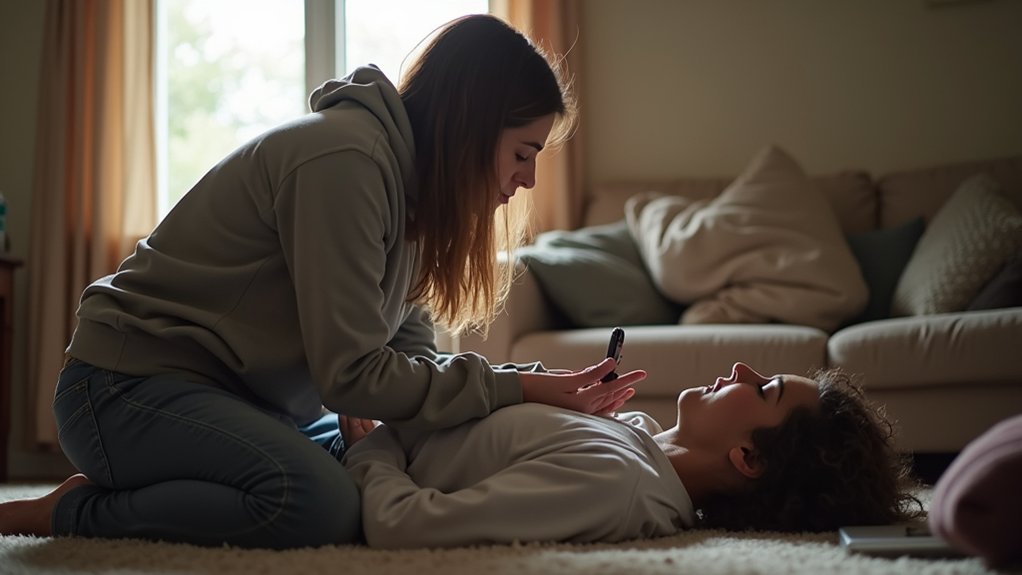
Call 911 the moment you suspect an overdose. Don’t wait for symptoms to worsen or try to confirm the substance first. A suspected overdose is a life-threatening emergency, even when you don’t know what the person took. Give the dispatcher a precise location and state clearly if the person is unresponsive and not breathing.
Focus on these immediate priorities while you’re on the phone:
- Check responsiveness and breathing, note any slow, shallow, or stopped breathing, gurgling, or snoring sounds.
- Administer naloxone if it’s available and you suspect opioids.
- Position the person on their side to reduce choking risk if they vomit.
Stay with your loved one until help arrives. Don’t leave them alone, even if they seem to improve.
When Should Naloxone Be Used if Opioid Exposure Is Possible
Use naloxone the moment you recognize signs of a possible opioid overdose, and give it as soon as you suspect opioids are involved. Don’t wait for certainty about the substance. If you see unresponsiveness, slow or stopped breathing, pinpoint pupils, or pale, cold, clammy skin, administer naloxone right away. It can reverse opioid effects and restore breathing quickly. If breathing doesn’t improve within a few minutes, give another dose, since more than one may be needed. Keep in mind naloxone isn’t a substitute for emergency care, so call 911 first or simultaneously. After giving it, continue monitoring closely, because overdose symptoms can return once naloxone wears off. Stay with your loved one, keep them breathing, and wait for help.
What Information Should You Give Emergency Responders
Give responders your exact location first, including the address, floor, apartment number, or any landmarks that’ll help them reach you fast. Once they know where to go, tell them what’s happening so they can prepare the right response.
Focus on these key details:
- The person’s condition: State clearly if they’re unresponsive, not breathing, or breathing slowly, and mention any gurgling, choking, or blue-tinged skin.
- What’s known about the substance: Share what they may have taken, how much, and when, even if you’re unsure.
- Interventions given: Report whether you’ve administered naloxone, how many doses, and any change you’ve observed.
Stay on the line so responders can guide you until help arrives.
Why Should You Stay With the Person Until Help Takes Over
You should stay with the person until help takes over because an overdose can change fast, and someone who seems stable one moment may stop breathing the next. If you’ve given naloxone, its effects can wear off before the drug leaves their system, allowing overdose symptoms to return. That’s why you shouldn’t leave an unresponsive person alone, even if their breathing improves temporarily. Keep them on their side to reduce choking and aspiration risk, and try to keep them awake and breathing. Watch for warning changes, especially blue, purple, gray, or ashen lips, nails, or skin, which signal dangerously low oxygen. Your presence lets you act immediately if their condition worsens and lets you update responders when they arrive. Stay until emergency help fully takes over their care.
Get Help After an Overdose Before Another Emergency Happens
Changes Treatment Center in Costa Mesa provides treatment for drug and alcohol addiction through Partial Hospitalization (PHP), Intensive Outpatient (IOP), individual and group therapy, psychiatric support, medication management, and treatment for co-occurring mental health concerns. If your loved one has experienced an overdose or their substance use continues to create serious risks, treatment can address the addiction and the factors contributing to ongoing use. Call (949) 807-2008 to speak with the admissions team about available treatment options.
Frequently Asked Questions
Can Naloxone Harm Someone Who Is Not Experiencing an Opioid Overdose?
If you’re unsure whether someone’s experiencing an opioid overdose, you can still give naloxone safely. It only reverses opioid effects, so it won’t harm someone who doesn’t have opioids in their system. When you’re facing a life-threatening emergency and can’t be certain, giving naloxone is the safer choice. Don’t hesitate out of fear you’re wrong. Still call 911 immediately, since naloxone isn’t a substitute for emergency medical care.
How Long Does Naloxone Typically Take to Start Working?
Naloxone typically starts working within 2 to 3 minutes when given intranasally or by injection. If you don’t see improved breathing or responsiveness within that window, you may need to give another dose. Keep monitoring the person closely, because naloxone’s effects can wear off before the opioids do, and symptoms can return. Stay with your loved one and continue emergency care until help arrives, even if they seem better.
Are There Legal Protections for People Who Call 911 During Overdoses?
Yes, many places have Good Samaritan laws that protect you when you call 911 during an overdose. These laws often shield you and the person overdosing from certain drug-possession charges, encouraging you to seek help without fear. Protections vary by state, so they don’t cover every situation. Don’t let worry stop you, calling 911 saves lives. For guidance and support, reach SAMHSA’s free, confidential helpline at 1-800-662-HELP (4357).
Where Can I Get Naloxone and Does It Require a Prescription?
You can get naloxone at most pharmacies, often without a prescription, since many states allow you to buy it over the counter. Community health centers, harm-reduction programs, and local health departments frequently offer it for free. You can also call SAMHSA’s confidential 24/7 helpline at 1-800-662-HELP (4357) for guidance on nearby resources. Keeping naloxone accessible at home shortens your response time and can save your loved one’s life.
How Should Naloxone Be Stored to Remain Effective?
Store your naloxone at room temperature, ideally between 59°F and 77°F, and keep it away from direct sunlight and extreme heat or cold. Don’t leave it in a hot car or freezing space, since temperature extremes can reduce its effectiveness. Check the expiration date regularly and replace it when needed. Keep it in an accessible, easy-to-remember spot so you can act fast when every second counts.