







Yes, dabs and wax show up on a drug test. They’re detected the same way as any other form of THC, through the metabolite THC-COOH. But because concentrates are far stronger than flower, often 40 to 90% THC versus 15 to 20%, they create more metabolites and can stay detectable longer: roughly 3 to 7 days for occasional use and up to 30 days or more for daily use. Dabbing is a concentrate; for vape pens and carts, see how long a THC vape stays in your system.
Key Takeaways
- Concentrates like wax, shatter, and distillate test between 40% and 95%+ THC, far exceeding flower’s typical 15% to 20%.
- Higher potency delivers a larger THC dose per inhalation, generating more fat-soluble metabolites for tests to detect.
- Drug tests detect THC metabolites, not the product form, so they cannot distinguish wax from flower.
- Detection windows range from about 3 days for infrequent use to over 30 days for heavy daily use.
- Frequent concentrate use increases lipid-based metabolite accumulation, slowing clearance and extending detection across urine, blood, saliva, and hair.
Why Does Potency Matter for THC Wax and Concentrate Drug Testing

Potency matters for drug testing because concentrates deliver far more THC per use than flower. Cannabis flower averages 15% to 20% THC, but wax, shatter, and live resin commonly test between 40% and 90%, with some products exceeding 95%. That higher concentration means you’re absorbing a much larger THC dose in a single inhalation, and fat-soluble metabolites accumulate with repeated use. Does THC linger longer than flower? The consumption method greatly affects detection times, making it vital to know the differences for drug testing.
How Long Does Wax Stay in Your System and What Changes Detection
Wax stays in your system for about 3 days with infrequent use, 5 to 7 days when using around four times per week, 10 to 15 days with daily use, and more than 30 days with multiple uses per day. Detection depends on how often you use it, the test method, and your individual metabolism.
What changes detection is cumulative exposure. Because concentrates deliver 40% to 90%+ THC per session, you absorb more THC than you would from flower. Fat-soluble THC metabolites accumulate in tissue with repeated use, prolonging clearance. Standard urine screens target these metabolites, not the product form. Your metabolism, body fat, hydration, and dosing frequency all shift how long you’ll test positive after use. THC levels in your system vary by body fat, hydration, and overall health, all influencing how quickly it clears.
What Does a THC Concentrate Drug Test Actually Detect
A THC concentrate drug test detects THC metabolites, the compounds your body produces as it breaks down THC, not the wax, shatter, or live resin you used, or even THC itself in most cases. Standard screening targets these metabolites. Urine testing, the most common method, focuses on these fat-soluble metabolites rather than the active cannabinoid or the product form. So the test can’t tell whether you dabbed high-potency concentrate or smoked flower. It only registers metabolite presence. THC detection methods in urine identify lingering metabolites, offering insight into recent use and helping users navigate drug screening protocols.
What the product form changes is exposure. Because concentrates deliver 40% to 90%+ THC per session, they push more THC into your system, generating more metabolites for the test to catch. That’s why potency matters. It determines how much your body must clear, and how long results stay positive.
How Do Wax, Shatter, Oils, and Distillates Differ as Concentrated THC Products
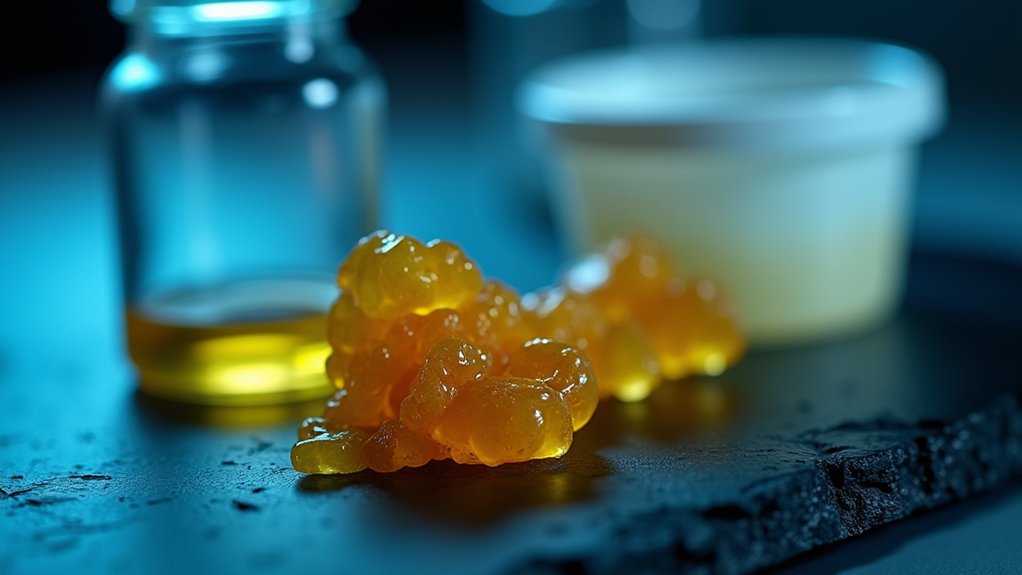
Wax, shatter, oils, and distillates differ by extraction method and final consistency, but they share one trait: concentrated THC that dwarfs flower. Wax has a soft, opaque texture, and shatter cures into a brittle, glass-like sheet. Oils and distillates take liquid forms, with distillates refined to isolate cannabinoids at exceptional purity. Whether you dab wax or vape distillate, you’re absorbing THC levels several times higher than flower’s typical 15% to 20%.
| Product | Consistency | Typical THC |
|---|---|---|
| Wax | Soft, opaque | 50% to 80% |
| Shatter | Brittle, glassy | 60% to 90% |
| Oils | Liquid | 40% to 80% |
| Distillate | Refined liquid | 90%+ |
The form you choose affects your dose per session. Higher-purity distillates push exposure upward, which directly shapes how long metabolites stay detectable afterward.
How Can Concentrate Potency Change Total THC Exposure Compared With Flower

Concentrate potency changes total THC exposure by delivering far more THC per session than flower, boosting your total cannabinoid intake. Flower typically averages 15% to 20% THC, while concentrates like wax, shatter, and live resin test between 40% and 90%, with some products exceeding 95%. That makes concentrates roughly three to four times stronger than high-grade flower by weight.
When you take a single dab, you’re delivering a large THC dose in one inhalation, even though the visible amount looks tiny. That’s the key difference. You can consume far more THC per session with concentrates than you would smoking flower, boosting your total cannabinoid intake. Higher intake means more THC metabolites entering your system, which directly raises the likelihood and duration of a positive drug test.
How Does Frequent Concentrate Use Affect Cannabinoid Metabolite Patterns Over Time
Frequent concentrate use reshapes your metabolite patterns because THC metabolites are fat-soluble and accumulate in your body’s tissues with each session. When you dab products testing between 50% and 90% THC, you’re delivering far more cannabinoids per inhalation than flower averaging 15% to 20%. Your fat stores absorb this excess, then slowly release metabolites back into your bloodstream over days. With repeated daily use, you never fully clear the previous session’s load, so your baseline metabolite concentration climbs. This cumulative effect explains why daily use can stay detectable for 10 to 15 days, while multiple daily sessions can exceed 30 days. Your metabolism, body composition, and session frequency all shape this pattern, but higher potency consistently drives heavier, longer-lasting metabolite accumulation than lower-dose flower exposure.
How Can Specimen Type and Test Cutoff Change Whether Concentrate Use Is Detected
Specimen type and test cutoff change whether concentrate use is detected because each specimen samples a different detection window and each threshold sets a different bar for a positive result. Urine screening targets THC metabolites and dominates most testing, but its cutoff matters. A standard immunoassay often flags at 50 ng/mL, while confirmatory testing drops to 15 ng/mL, so borderline samples can flip based on threshold alone. Because concentrate use loads more THC per session, you’re more likely to clear those cutoffs and stay above them longer. Other specimens behave differently: blood reflects recent use and clears faster, saliva detects a narrow window, and hair can extend detection to roughly 90 days. So the same concentrate exposure can read positive or negative depending entirely on specimen and cutoff.
Can a Standard Cannabis Drug Test Tell Whether THC Came From Wax or Flower
No, a standard cannabis drug test can’t tell whether your THC came from wax or flower, because it detects THC metabolites, chiefly THC-COOH, not the product you consumed. The assay measures a chemical fingerprint that’s identical regardless of source, so potency influences quantity, not identity. What actually shapes your result:
Drug tests detect THC-COOH metabolites, not their source, so wax and flower leave an identical chemical fingerprint.
- Dose per session: concentrates at 50% to 90%+ THC deliver far more THC than 15% to 20% flower.
- Frequency: daily or multiple daily uses accumulate fat-soluble metabolites, extending detection.
- Metabolism: individual factors affect clearance rates and detection windows.
- Test cutoff: lower thresholds flag smaller metabolite concentrations.
- Specimen type: urine, blood, and oral fluid differ in detection timelines.
Treatment for High-Potency Cannabis Use at Changes Treatment Center
Changes Treatment Center in Costa Mesa provides treatment for marijuana and other substance use disorders through Partial Hospitalization (PHP), Intensive Outpatient (IOP), individual and group therapy, psychiatric support, and treatment for co-occurring mental health concerns. For people struggling with frequent use of THC wax, concentrates, carts, or other high-potency cannabis products, treatment can address the substance use itself along with the habits, triggers, and mental health symptoms connected to it. Call (949) 807-2008 to speak with the admissions team about available treatment options.
Frequently Asked Questions
Can Drinking Water or Detox Kits Speed up THC Elimination?
No. They mainly dilute urine for a short time, which labs can flag, and they don’t remove the THC metabolites stored in body fat that drive the detection window.
Is Secondhand Concentrate Vapor Enough to Trigger a Positive Test?
It’s very unlikely in normal conditions. A positive from secondhand vapor would require extreme, sustained exposure in an enclosed space well beyond typical situations.
Are CBD Concentrates Likely to Cause a Failed Drug Test?
Pure CBD shouldn’t, but many concentrates contain trace THC. Regular use of THC-containing CBD products can accumulate enough to cause a positive result.
How Much Does Exercise Affect Stored THC Metabolite Release?
Exercise can briefly raise blood metabolite levels as fat is burned, so hard workouts right before a test may slightly increase detectability rather than reduce it.
Can Prescription Medications Cause False Positives on a THC Test?
Some medications, such as certain NSAIDs and proton pump inhibitors, have been linked to rare false positives on initial screens. Confirmation testing distinguishes true THC use from interference.