






DBT therapy treats addiction by teaching you four core skills that target emotional dysregulation, the root driver of most substance use. You’ll learn mindfulness to recognize triggers, distress tolerance to survive cravings without using, emotional rand egulation to manage the intense feelings that fuel relapse, and interpersonal effectiveness to build relationships that support recovery. Research shows these skills measurably reduce substance use and craving intensity. Each skill plays a distinct role worth exploring further. Therapy for anxiety and addiction is becoming increasingly recognized as a vital component of comprehensive treatment strategies. Many individuals find that addressing both issues simultaneously enhances their recovery journey and promotes lasting change.
What Makes DBT Effective for Addiction Recovery
Several factors make DBT uniquely suited for addiction recovery. Unlike traditional talk therapy, DBT therapy for addiction treatment combines structured skill-building with emotional acceptance, helping you change harmful behaviors without dismissing the pain driving them. Research shows DBT decreases substance use by targeting emotional dysregulation, a core driver of addictive patterns. 8 therapy models for addiction offer diverse approaches that can cater to individual needs. Understanding the strengths and limitations of each model can empower those in recovery to make informed choices.
You’ll develop capabilities in four critical areas. Emotional regulation addiction therapy teaches you to manage intense feelings that previously triggered use. Distress tolerance and addiction recovery skills help you survive crises without reaching for substances. Mindfulness-based addiction therapy strengthens your ability to observe cravings without acting impulsively. Together, these skills form a thorough relapse prevention DBT addiction framework. DBT treats lapses as problems to solve, not failures, keeping you engaged throughout recovery. The therapy’s structure also includes phone coaching between sessions, giving you real-time guidance when cravings or emotional crises arise outside of scheduled appointments.
How Mindfulness Helps You Recognize Triggers
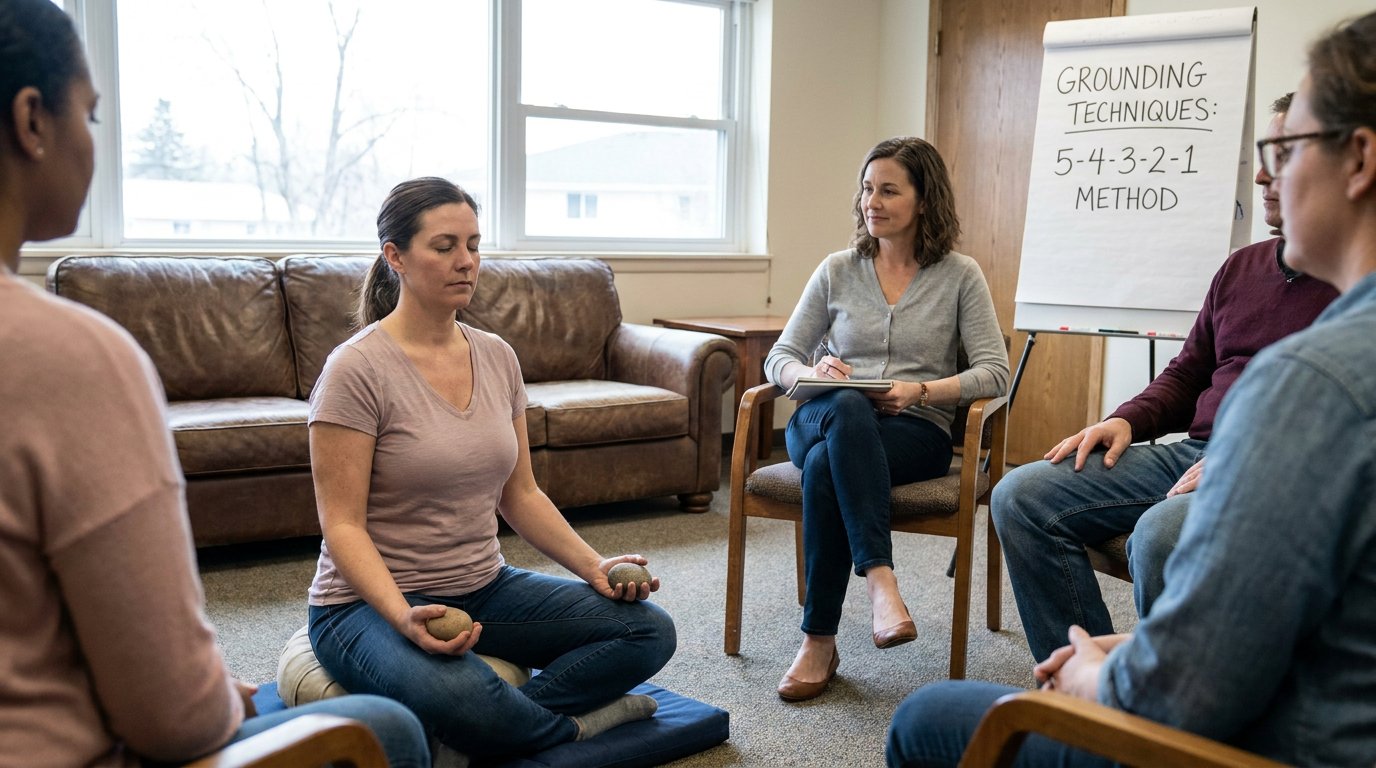
When you practice mindfulness, you train your brain to notice thoughts, emotions, and physical sensations as they arise, before automatic reactions take over. In mindfulness addiction counseling, this present-moment awareness creates a critical pause between impulse and action, interrupting habitual substance-seeking behavior.
Trigger recognition through body cues is central to this process. Body-scan techniques and reveal tension, anxiety, and craving-related activation that signal high-risk states. By tuning into breath and bodily sensations, you detect triggers earlier, before escalation occurs.
Mindfulness also strengthens emotional regulation techniques and addiction counseling outcomes by helping you observe stress, sadness, and frustration without reacting impulsively. Research supports that trait mindfulness is negatively associated with craving intensity. Practicing naming emotions without judgment allows you to identify what you are feeling in the moment, further deepening self-awareness and reducing reactive behavior. These DBT skills substance abuse treatment techniques build the self-awareness necessary for sustained recovery and effective relapse prevention.
DBT Skills That Get You Through a Crisis

A crisis doesn’t wait for you to feel ready, it hits fast, and without concrete skills, the urge to use substances can override rational thought in seconds. Dialectical behavior therapy equips you with distress tolerance skills designed for exactly these moments. These skills are specifically intended for situations involving intense pain or overwhelming urges, not for everyday problems that can be managed with other emotional regulation techniques.
When crisis hits, you can apply these strategies for urge control and crisis management:
- STOP: Pause, step back, observe your internal state, and proceed mindfully rather than reactively.
- TIP: Use temperature change, intense exercise, or paced breathing to reset your nervous system when thinking clearly isn’t possible.
- Self-soothing: Engage your five senses with calming textures, sounds, or scents to reduce emotional intensity.
- Pros and cons: Compare outcomes of acting on the urge versus riding it out.
These skills prioritize surviving the moment safely.
Stronger Relationships as Relapse Prevention
Crisis skills keep you safe in the moment, but lasting recovery depends on the relationships you build around you. DBT for addiction recovery emphasizes interpersonal effectiveness repair and addiction treatment skills that directly reduce relapse risk. You’ll learn boundary-setting to limit exposure to high-risk dynamics, repairing trust to reduce shame-driven isolation, and social support planning to create accountability networks. How CBT works for addiction plays a crucial role in understanding the underlying thought patterns that contribute to substance use. By addressing these cognitive distortions, individuals can develop healthier coping strategies that support their recovery journey.
| DBT Skill | Relationship Function | Recovery Benefit |
|---|---|---|
| DEAR MAN | Asserting needs clearly | Reduces conflict-driven cravings |
| GIVE | Building genuine rapport | Strengthens supportive connections |
| FAST | Protecting self-respect | Prevents guilt-driven substance use |
When you communicate effectively, relationships become active relapse-prevention tools. You’re not recovering alone, you’re building a structure of connection that holds when internal control wavers.
Call Today and Begin Evidence-Based Healing
From CBT to DBT to trauma-informed care, modern therapy offers powerful tools for lasting recovery when guided by the right professionals. At Changes Treatment Center in Costa Mesa, CA, our caring team provides trusted Therapy Services with understanding and a plan shaped around you. Call (949) 807-2008 today and take the first step toward lasting change.
Frequently Asked Questions
How Long Does a Typical DBT Program for Addiction Treatment Last?
A typical DBT program for addiction treatment lasts 6 to 12 months. You’ll generally attend weekly individual therapy and weekly group skills training, giving you enough time to learn and practice all four core modules. You may notice early improvements in emotional awareness within weeks, but deeper behavioral change develops over several months of consistent practice. Your specific timeline may vary based on severity, co-occurring conditions, and treatment setting.
Can DBT Be Combined With Medication-Assisted Treatment for Addiction?
Yes, you can combine DBT with medication-assisted treatment (MAT) for addiction. MAT manages your physical withdrawal and cravings, while DBT builds the psychological coping skills you’ll need for long-term recovery. Research shows this combination improves treatment retention and reduces substance use. DBT’s distress tolerance and emotion regulation skills complement MAT by helping you manage triggers and emotional pain that might otherwise lead to relapse.
Is DBT Effective for People Without a Dual Diagnosis?
Yes, DBT can still be effective for you even without a dual diagnosis. Research suggests it’s especially helpful when your substance use is driven by emotional dysregulation, impulsivity, or difficulty tolerating distress. DBT’s core skills, mindfulness, distress tolerance, and emotion regulation, directly target these patterns. However, it may be less beneficial if your addiction isn’t strongly linked to emotional factors. Overall, evidence supports DBT as a promising option for difficult-to-treat addiction cases.
What Qualifications Should a DBT Therapist Have for Addiction Treatment?
A qualified DBT therapist for addiction treatment should hold a master’s degree or higher, maintain an active clinical license, and complete formal DBT-specific training covering all four core modules. You’ll want someone with direct experience treating substance use disorders and co-occurring conditions. They should participate in a DBT consultation team, understand addiction-specific adaptations like dialectical abstinence, and pursue ongoing continuing education to maintain treatment fidelity and clinical competence.
Does Insurance Typically Cover DBT Therapy for Substance Use Disorders?
Many insurance plans cover DBT therapy for substance use disorders, but coverage isn’t guaranteed. Your specific benefits depend on your plan’s design, deductible, copay, and whether your provider is in-network. You should call your insurer’s member services to confirm outpatient mental health and substance use disorder benefits, ask about prior authorization requirements, and request cost estimates before starting treatment. Your treatment program can also verify benefits directly with your insurer.